

Short answer: Florida humidity and salt air dirty lanais fast. Here's how to maintain screens, frames, and floors between professional pressure wash visits without causing
A lanai in Florida gets dirty faster than almost any other surface around a home, and the culprit is not just rain or pollen. It is the combination of heat, constant humidity, salt air, and the way a screened enclosure traps moisture against every surface it touches. If you wait until your next scheduled pressure washing to deal with it, you are often giving mold, algae, and salt residue weeks or months to bond. The good news is that keeping a lanai presentable between professional cleanings does not require heavy equipment or a lot of time. It requires the right habits and an honest understanding of what you are actually dealing with.
Why Florida Lanais Dirty Up So Fast Between Cleanings
Most homeowners think about lanai cleaning as a once- or twice-yearly event. That schedule made sense before Florida's coastal development pushed subdivisions closer to the water, and before we started seeing the kind of back-to-back humid summers that now run from May well into October. The environment your lanai sits in is actively working against you, and understanding that changes how you approach maintenance.
Salt spray is the one most people underestimate. Even if your home is several miles from the coast, onshore winds carry fine salt particles inland and they settle on every horizontal and vertical surface your lanai has. Screen mesh is particularly vulnerable because it has so much exposed surface area. When salt residue sits on aluminum frames and mesh for more than a few weeks after a coastal wind event, it accelerates corrosion in a way that shows up years later as pitting, weakened mesh joints, and eventually screen failure. By then, the cost is not a cleaning bill. It is a repair or replacement bill.
Puma says: Higher frequency is not always better.
Mold is the second thing that catches people off guard. Florida's humidity stays high enough for mold spores to establish on screens, frames, and grout lines even during what passes for a dry spell here. The interior corners of a screened enclosure, where two screen panels meet a frame member, are especially prone to this because airflow is low and moisture lingers. Once mold gets a foothold in those crevices, rinsing it with a garden hose does not remove it. It just moves it around temporarily.
Furniture makes this worse. Chairs and tables that sit directly on lanai concrete or tile trap moisture underneath them and in the joints where frame pieces connect. We have seen this on dozens of lanais: the open floor looks fine, the furniture gets moved during cleaning, and there is a dark shadow of mold growth underneath every piece. That hidden growth spreads. Moving furniture regularly during interim cleaning is not optional if you actually want to stop mold from spreading across the floor.
One more thing: pressure washing too frequently causes its own damage. Running a pressure washer on a lanai more than twice a year can degrade aluminum frames and screen mesh, especially on older enclosures. Higher frequency is not always better. That is exactly why good interim cleaning habits matter so much. They let you extend the interval between professional visits without paying for it later in screen repairs and frame damage.
A Practical Interim Cleaning Routine That Actually Works
The goal of interim cleaning is not to replicate a professional pressure washing. It is to interrupt the cycles of mold growth, salt buildup, and algae adhesion before they become embedded problems. Done right, a monthly routine takes less than an hour and keeps your lanai in genuinely good shape between professional visits.
A soft-bristle brush, the kind with bristles flexible enough to not stress the mesh, paired with a diluted vinegar solution is your best tool here. Vinegar cuts through the film of salt and organic debris that builds up on mesh without harsh chemistry that can accelerate frame oxidation. Work top to bottom on each panel, rinse with a garden hose on a low-pressure setting, and let it dry before moving on. You are not trying to power through the mesh. You are trying to clean the surface of it without stretching or puncturing it.
The horizontal and vertical aluminum members of a lanai enclosure collect dust, pollen, and salt in the same way the screens do, and they are just as susceptible to mold in the joints. A damp microfiber cloth handles the flat surfaces well. For corners and joints where a cloth cannot reach, a soft brush works better than any kind of pressure. The goal is gentle and thorough, not fast.
The floor is where most homeowners spend either too much time or not enough. Lanai concrete and tile are porous, and Florida algae finds that porosity and colonizes it. Regular sweeping prevents organic debris from sitting long enough to become a growth medium. For actual cleaning between professional visits, a diluted cleaning solution applied with a mop or scrub brush and rinsed thoroughly with a hose is enough to handle surface buildup. What it cannot handle is anything that has already bonded into the pores of the concrete. That is a professional soft-wash job.
If your lanai floor has been sealed after its last professional cleaning, you have a real advantage here. A water-repellent coating on concrete or tile after cleaning reduces how easily algae adheres in the first place. In our experience treating lanai surfaces for customers, sealed floors stay visibly cleaner longer than untreated ones and need less effort during interim cleanings. The coating does not last forever, but it meaningfully extends the window before staining returns, which in Florida's high-humidity season matters a lot.
After any tropical storm or extended stretch of onshore winds, move this routine up. Do not wait for your next scheduled cleaning. Salt and debris that bonds to screens and frames after a storm hardens faster than the gradual buildup from daily humidity. Rinsing the enclosure within a week of a storm is the minimum. A light scrub of the frames and a vinegar wash on the screens is better. Most homeowners delay until their next scheduled pressure washing, and that delay is exactly when the corrosion and staining do their damage.
What Interim Cleaning Cannot Do, and When to Call a Professional
Honest answer: a garden hose and a soft brush have limits. If your screens have dark, textured patches that do not come clean with a vinegar wash, that is embedded mold, not surface dirt. If your concrete floor has green or black staining that returns within a week of cleaning, algae has colonized the pores, not just the surface. If your frames are showing white powdery deposits that wipe off but come back, that is oxidation from salt damage that has already started.
These are not failures of your interim cleaning routine. They are signs that the lanai needs professional soft washing with the right chemistry applied at the right dwell time to actually penetrate and kill what is growing there. DIY pressure washing is not the answer for these situations. Running a pressure washer on lanai screens risks puncturing the mesh and pulling it away from the frame, and it does not apply any chemistry to kill mold or algae at the root. It just blasts the surface, and the problem comes back faster than before.
Puma says: If your screens have dark, textured patches that do not come clean with a vinegar wash, that is embedded mold, not surface dirt.
The right sequence is professional soft washing to reset the surface, followed by a sealer application on the floors and a targeted anti-fungal treatment on the screens and frames if mold has been an ongoing issue. Then your interim routine maintains what the professional cleaning established. That combination is genuinely more cost-effective than skipping the interim care and relying on professional visits to undo months of buildup each time.
There is also the matter of post-storm season timing. Florida's tropical storm season does not end cleanly. The debris, standing water, and salt accumulation from a busy storm season can leave a lanai in rough shape heading into fall, and that is when most homeowners schedule a professional cleaning. Getting that visit done sooner rather than later, and not waiting until spring, prevents the hardened buildup from becoming a much harder cleaning job or, worse, a screen replacement job.
Here are the questions we hear most before homeowners decide how to approach their lanai care.
The best lanais we see are maintained by homeowners who treat the professional cleaning as a reset and the monthly routine as the actual maintenance. The worst ones are treated as fire-and-forget, cleaned once or twice a year and ignored in between. Florida does not allow that. The environment is too aggressive. But with a consistent light-touch routine, your lanai stays genuinely clean and your screen enclosure stays in good shape for years longer than it otherwise would.
Bottom line: monthly soft cleaning with the right tools and solution, furniture moved every time, a sealer on the floor after professional visits, and an accelerated rinse after storms. That is the routine. Do those things and your lanai will look like it was just professionally washed most of the time, because you will not be letting the buildup compound between visits.
If you are already past the point where interim cleaning will catch up, or if it has been more than a year since your last professional soft wash, that is where we come in. No amount of scrubbing recovers a surface that needs professional chemistry and the right equipment to reset it properly.
Here are the questions we hear most before homeowners decide how to approach their lanai care.
Questions people ask
How often should I clean my lanai between professional pressure washings?
Once a month is the right frequency for most Florida lanais. In coastal areas or during the peak humidity months of summer, every three weeks is better. The goal is to interrupt mold and algae cycles before they embed into screens and porous floor surfaces. If you have had a tropical storm or a prolonged stretch of onshore winds, do not wait for your monthly schedule. Rinse and lightly scrub within a week of the weather event, because salt and debris harden faster after a storm than through everyday accumulation.
Can I use a pressure washer on my lanai screens myself?
We strongly recommend against it. Lanai screen mesh is under tension and the fibers are fine. A residential pressure washer, even on a low setting, generates enough force to puncture panels, stretch the mesh away from spline channels, or separate the mesh from frame joints. Those repairs cost significantly more than a professional soft washing. For interim cleaning, a soft-bristle brush and a garden hose on low pressure do the job safely. When you need actual pressure washing, leave it to someone running the right equipment with the right technique for screened enclosures.
What is the best DIY solution for cleaning lanai screens and frames?
A diluted white vinegar solution is our first recommendation for most homeowners. It cuts through salt film and surface mold without harsh chemistry that can accelerate oxidation on aluminum frames. Mix it at a mild concentration, apply it with a soft-bristle brush, and rinse thoroughly with low-pressure water. For visible mold spots on frames and joint areas, a slightly stronger application with a short dwell time before rinsing works better. Avoid bleach-based cleaners on screen mesh unless diluted significantly, as concentrated bleach can weaken the fibers over time.
Should I seal my lanai floor after a professional cleaning?
Yes, and it makes a real difference. Porous concrete and tile are where algae gets its foothold in Florida. A water-repellent coating applied after a professional soft wash reduces how easily algae and organic debris adhere to the floor surface, which means your monthly interim cleaning stays more manageable and the floor looks cleaner longer. The coating does wear down over time and needs to be reapplied after subsequent professional cleanings, but in terms of extending the interval before visible staining returns during Florida's humid months, it is one of the most practical investments you can make in your lanai.
How do I prevent mold from growing under my lanai furniture?
Move the furniture every time you clean. This is the single habit that most homeowners skip and most consistently leads to hidden mold growth. Chairs and tables trap moisture against the floor and in their own frame joints, and in Florida's humidity, mold establishes there quickly. During your monthly cleaning routine, shift every piece of furniture, clean the floor underneath it, and let that area dry before moving pieces back. If you find dark mold shadows on the floor under furniture that does not come up with your normal cleaning, that is embedded growth and it needs professional treatment to clear properly.
How do I know when my lanai needs a professional cleaning instead of just interim maintenance?
A few clear signs: screen panels have dark textured patches that do not respond to a vinegar wash, concrete or tile staining returns within a week of cleaning, frames show white powdery deposits that keep coming back, or there is a persistent musty smell in the enclosure even after cleaning. These are signs that mold or algae has gone beyond the surface and embedded into materials. Interim cleaning maintains a surface that has been properly reset. It cannot recover a surface that has not. If it has been more than a year since a professional soft wash, it is almost certainly time to schedule one before attempting any interim routine.
What should I do to my lanai after a Florida tropical storm?
Act within the first week, and do not wait for your next scheduled cleaning. Post-storm debris and salt accumulation bond to screens and frames faster than everyday buildup, and once they harden, they are significantly harder to remove without professional intervention. Start by rinsing the entire enclosure with a garden hose to remove loose debris. Then do a full soft scrub of the screens and frames using your diluted vinegar solution. Check the floor for standing water that may have pooled in corners or under furniture, and clear it out before mold gets established. If the storm was significant, a professional inspection and soft wash sooner than your normal schedule is a sound decision.
Your pool cage
is next.
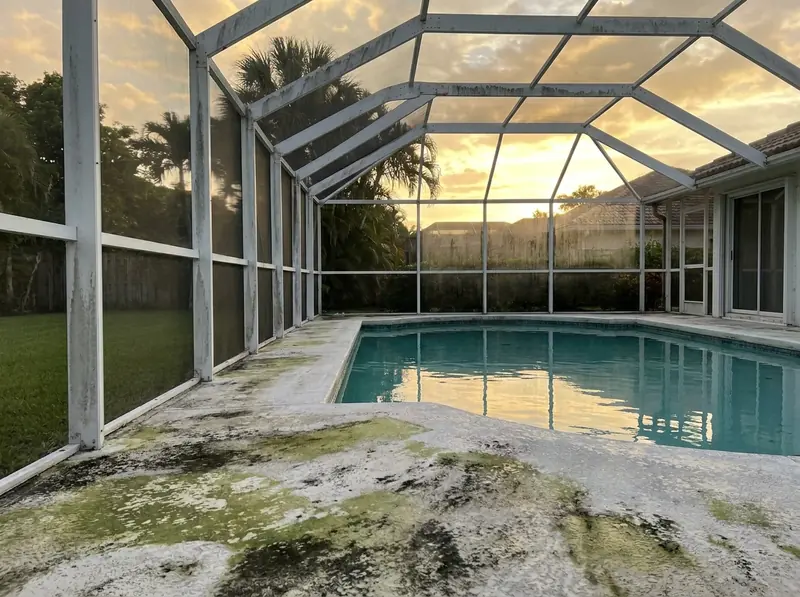
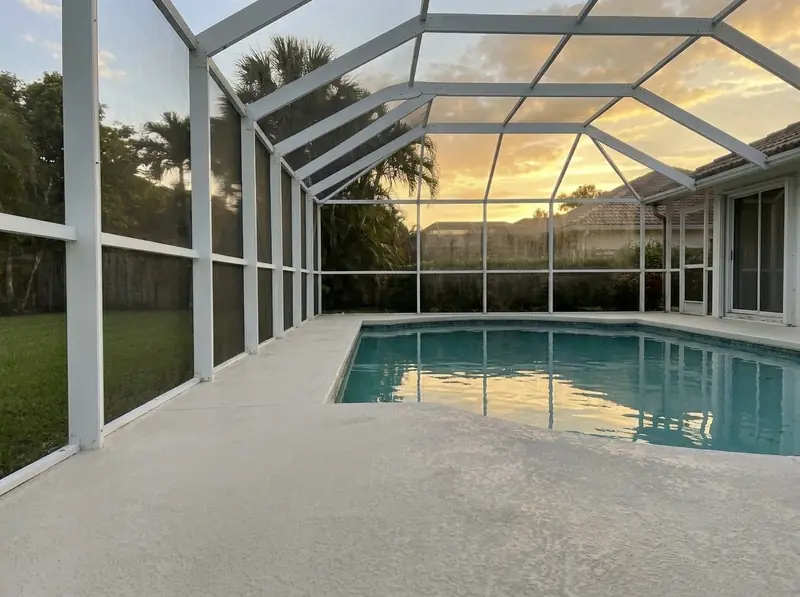 BeforeAfter
Drag to compare. Illustration; your crew sends real before-and-after photos of your own home.
See my price →