

Short answer: Hurricane season leaves salt, debris, and mold on Florida home exteriors. Here's what surfaces to clean first after a storm, and why timing matters.
A storm passing through Florida doesn't just knock things over. It coats everything it touches, and the coating is the real problem. Salt spray, airborne debris, and floodwater residue start working on your home's exterior within hours of the storm passing, and most of what they leave behind is invisible until the damage is already done.
This is what we see on homes after nearly every significant storm through hurricane season, which runs from June through November with the most active stretch landing in late August and mid-October. The homes that come out of storm season in good shape are the ones where the exterior gets properly cleaned in the days right after. The ones that don't get attention? You can usually tell by the following spring.
Salt Is the Primary Threat, and It Moves Fast
Florida homeowners understand wind and rain. What catches people off guard is what the wind and rain carry with them along the coast and even well inland: salt. Hurricane-force winds pull salt spray off the water and push it miles in every direction. It lands on rooflines, siding, window frames, gutters, screens, and every horizontal surface it can find. And it doesn't sit there waiting for you to get around to it.
Salt starts bonding to exterior surfaces quickly after a storm. In our experience cleaning homes post-storm, the window for easy removal is roughly 72 hours. After that, salt crystals begin to chemically bond to whatever surface they landed on, whether that's stucco, vinyl siding, aluminum soffit, or painted wood. What would have rinsed off cleanly on day one becomes stubborn residue by day four and a permanent etching problem by the following week.
Puma says: The surfaces that collect the most salt aren't always the ones homeowners check first.
The surfaces that collect the most salt aren't always the ones homeowners check first. Gutters and downspouts trap salt-laden debris in the curved channels where it sits and concentrates. Soffit edges, especially on homes with wide overhangs, collect a surprising amount of spray that gets blown up and under the roofline. Fascia boards along the roof edge take direct hit after direct hit during a storm and often hold more salt per square foot than the siding below them.
Aluminum fixtures take the worst of it. Metal roof accents, gutter systems, and aluminum screen enclosures oxidize rapidly after saltwater exposure. The oxidation process creates that chalky white film you see on older coastal homes. Once it sets in, it's much harder to treat, and pressure washing alone won't get it off cleanly without risking surface damage. The cleaning approach for oxidized aluminum has to be gentler and more chemical than mechanical.
Why Pressure Washing Alone Gets Post-Storm Cleanup Wrong
Here's the part of post-storm cleaning that most homeowners and even some inexperienced contractors get backwards. Grabbing a pressure washer and blasting the home down after a storm feels productive. It looks like you're doing something. But high-pressure water applied to surfaces that are already stressed from storm exposure can make things worse.
Stucco, which covers a huge percentage of Florida homes, is porous. So is wood. So is composite siding. When you hit those surfaces with high-pressure water right after a storm, you're not just removing the salt sitting on the surface. You're pushing water, and potentially salt, deeper into the material. The goal of storm cleanup is to get contaminants off the surface, not to drive them in further. Forcing moisture into wood fascia or stucco walls creates ideal conditions for mold, and in wood specifically, it starts the cycle toward rot.
The right approach for post-storm exterior cleaning is soft washing, which uses low pressure and appropriate cleaning solutions to lift salt, organic debris, and biological growth off surfaces without forcing moisture into the substrate. The cleaning chemistry does the work. The water pressure is there to rinse, not to blast. For surfaces like gutters, soffits, and metal fixtures, a non-corrosive solution applied at low pressure protects the material while still doing a thorough job on the contamination.
There's a finishing step that matters and that most DIY cleanups skip entirely: the final rinse. After soft-wash treatment, a low-pressure rinse with appropriately conditioned water prevents salt minerals from redepositing on the surface as the water dries. Skip that step and you can end up with a fresh set of mineral deposits even after a thorough cleaning. It's one of those things that separates a professional result from a good-effort-but-incomplete one.
To give a concrete example: we cleaned a home in the weeks after a mid-season storm a few years back where the homeowner had already done their own power washing the day after the storm. They'd hit the siding and soffit hard with a standard gas pressure washer. When we inspected before starting our work, the stucco was showing early efflorescence where salt had been driven into the wall and was now being pulled back to the surface as the moisture evaporated. The soffit panels had hairline stress marks along the edges. Neither of those things would have happened with a soft-wash approach on day one. We were able to treat the salt coming back through the stucco, but it took more than one visit to get it stable.
The Full List of What to Clean After a Storm
Most homeowners focus on what's visibly dirty after a hurricane. Mud on the driveway. Leaves plastered to the front door. Green streaks where water ran down the siding. Those things are obvious. The things that cause the most long-term damage are often the ones you have to know to look for.
Work through this list systematically rather than just washing what looks worst.
Puma says: Hard surface cleanup should be part of post-storm exterior work, not an afterthought.
Roof and roofline surfaces. Shingles and tile accumulate debris in the valleys and under the eaves where organic material traps moisture and salt. Fascia boards along the roofline need attention, especially if there's any landscape debris that packed against them during the storm. Debris lodged under shingles or in roof valleys holds moisture and creates a direct path toward rot and mold in wood-framed rooflines.
Gutters and downspouts. These are the first place we start after a storm. Gutters collect everything: leaves, dirt, salt, shingle granules that got stripped loose, and standing water that mixes all of it into a residue that sits in the channel. Downspouts carry it down and can leave deposits on lower siding and foundation lines. Clean the gutters, flush the downspouts, and inspect where they terminate.
Downspouts carry it down and can leave deposits on lower siding and foundation lines.
Soffits and eaves. Salt spray gets driven up and under the roofline during strong storms. Soffit panels, especially aluminum or painted wood ones, accumulate more than people expect. This is also where you'll find the first signs of mold growth after a storm because the conditions are right: moisture, warmth, and organic debris.
All exterior siding. Every square foot of it. Not just the sides that faced the storm. Wind wraps around structures and deposits material on all four elevations. Stucco is particularly prone to holding salt in its textured surface. Vinyl and hardie board hold less, but they still need attention, particularly at the seams and around penetrations like electrical boxes and hose bibs.
Window frames and tracks. Salt and debris collect in window channels and tracks. If left there, the salt accelerates corrosion on aluminum frames and makes wooden frames swell and stick. The glass itself usually rinses clean, but the frames and surrounding trim need deliberate attention.
Screen enclosures and lanais. Screen panels collect fine debris and salt film that reduces visibility and degrades the mesh over time. The aluminum framing of screen enclosures is particularly vulnerable to salt oxidation. After a storm is exactly the time to get the enclosure washed before the oxidation sets.
Driveways, walkways, and pool decks. These surfaces collect storm runoff, which can carry whatever was in the floodwater including contaminants from overflowing drainage systems. Concrete and paver surfaces are porous enough that biological contamination from storm runoff can set up and grow if left untreated. Hard surface cleanup should be part of post-storm exterior work, not an afterthought.
Wood decks and fences. This is a spot where the wrong cleaning method creates new problems. Wood is already stressed after a storm from saturation. High-pressure washing on waterlogged wood can open the grain, cause splintering, and drive salt deeper into the fibers. Gentle surface cleaning is what wood needs after a storm, not a pressure wash at full power. Get the debris off, treat the surface, and let it dry before evaluating whether it needs any additional restoration.
A/C condenser units. This one gets overlooked almost universally. The exterior fins on a condenser unit are aluminum and they're densely packed, which makes them a perfect trap for salt and fine debris. Salt accumulation on condenser coils degrades cooling efficiency over time, and the fins themselves can corrode and deform if the salt isn't cleared. A gentle low-pressure rinse on the exterior of the unit, keeping water away from electrical components, clears the fins without bending them. It's not a full HVAC service call, but it's a meaningful step in protecting the equipment.
The Timing That Determines Whether You Have a Cleanup or a Repair Bill
Everything above is more manageable when you act quickly. The 72-hour window we mentioned for salt bonding is real and it shapes how we talk to homeowners after storm events. The first couple of days after a storm are also when demand for cleanup services is highest, so there's a practical reality that you may not get professional help on your doorstep within hours of the storm passing.
What you can do immediately: rinse. A garden hose at normal faucet pressure won't do the deep cleaning that needs to happen, but it will slow the salt bonding process on accessible surfaces like window frames, screen frames, and patio furniture. Get water on those surfaces as soon as it's safe to be outside. That buys time until a proper soft wash can happen.
Puma says: What you should not do immediately: pressure wash at high settings.
What you should not do immediately: pressure wash at high settings. Wait for a professional assessment if you're not confident in the right pressure and chemistry for your specific surfaces. The cost of incorrect pressure washing on storm-stressed stucco or wood is a repair bill, not just a redo on the cleaning.
If floodwater reached any part of the exterior, that changes the cleanup priority entirely. Floodwater during storm events can carry sewage contamination, and any surface the water touched needs to be treated with that in mind, not just rinsed. Hard surfaces can be cleaned and disinfected with appropriate solutions. Materials that can't be fully cleaned and dried within 24 to 48 hours of flood exposure should come out. That applies to things like outdoor cushion foam, saturated wood components, and any porous material that held standing water. The goal is to prevent biological contamination from taking hold, and time is the critical variable.
If your home took a hit this storm season, don't wait to see what develops.
The homes that come out of storm season without long-term exterior damage are the ones where the cleanup is systematic and prompt, not just thorough. Getting the right surfaces cleaned in the right order with the right methods in the right window of time is exactly what post-storm exterior washing is designed to do. Do it right and you're maintaining a home. Wait too long or use the wrong approach and you're starting a repair.
If your home took a hit this storm season, don't wait to see what develops. Get the exterior assessed and cleaned while the damage is still in the cleanup phase, not the restoration phase.
Still have questions before you call? Here are the ones we hear most often after a storm.
Questions people ask
How soon after a hurricane should I have my home's exterior washed?
As soon as it's safe to be outside and services are available, ideally within 72 hours of the storm passing. Salt spray begins bonding chemically to exterior surfaces relatively quickly after a storm. What rinses off easily in the first day or two becomes significantly harder to remove after a few days, and can cause permanent etching or accelerated corrosion on metal and stucco surfaces if left too long. While you wait for a professional, a garden hose rinse on accessible surfaces like window frames and screen enclosures buys you time without making things worse.
Can I use my own pressure washer to clean after the storm?
You can, but there are real risks to doing it wrong. Standard residential pressure washers run at settings that can force water and salt deeper into porous surfaces like stucco and wood rather than removing them. Storm-stressed materials are more vulnerable than they are under normal conditions. If you're going to use a pressure washer yourself, drop the pressure significantly and work from a distance, treating it as a rinse rather than a blast. For anything involving stucco, wood, aluminum soffit, or screen enclosures, a professional soft-wash approach is a better call because the chemistry does the work and the pressure is kept low enough to protect the surface.
Does soft washing actually remove salt, or just surface dirt?
Soft washing removes both, and it does a better job on salt specifically than pressure washing does. The cleaning solutions used in soft washing are formulated to break down biological growth, salt residue, and mineral deposits at the surface level rather than just blasting them physically. For salt removal on textured surfaces like stucco or on metal fixtures with oxidation, the chemical action lifts the contamination instead of driving it in. The low-pressure finishing rinse then clears the loosened material without redepositing salt minerals as the water dries, which is the step most DIY cleanups miss.
My screen enclosure looks fine visually after the storm. Does it still need to be washed?
Yes. Salt film on screen mesh is fine enough that it's hard to see until the oxidation is already developing on the aluminum frame. The salt that lands on screen panels during a storm doesn't just affect visibility, it degrades the mesh and accelerates corrosion on the aluminum framing over time. Screen enclosures are one of the more expensive things to repair or replace on a Florida home, and keeping the aluminum frame free of salt buildup after storms is one of the most effective ways to extend its life. Post-storm washing of the enclosure is maintenance, not cosmetic.
What should I do if floodwater reached my patio or driveway during the storm?
Treat any surface that floodwater touched as potentially contaminated. Storm flooding can carry sewage from overwhelmed drainage systems, and that contamination isn't visible on concrete or paver surfaces once the water recedes. Hard surfaces like driveways, walkways, and patio decks can be cleaned with soap and water and then disinfected with an appropriate bleach solution. The key is to not assume that because the water drained and the surface looks clean, it's safe. Get those surfaces properly cleaned and disinfected before children or pets spend time on them, and before you put outdoor furniture back in place.
Do I need to clean my A/C unit's exterior after a hurricane?
It's worth doing, and most homeowners skip it entirely. The condenser fins on an outdoor A/C unit are aluminum and densely packed, which makes them efficient at trapping salt and fine storm debris. Salt accumulation on those fins reduces cooling efficiency over time and can cause the aluminum to corrode and deform. A gentle low-pressure rinse on the exterior of the condenser, avoiding electrical components, clears the fins without bending them. This isn't a replacement for a full HVAC service call, but it's a meaningful step you can take as part of a post-storm exterior cleaning routine to protect the equipment and keep it running efficiently.
Is there anything I can do before hurricane season to make post-storm cleanup easier?
A few things help significantly. Getting a full soft-wash treatment before the peak of hurricane season means you're starting with clean, salt-free surfaces, which makes post-storm salt easier to identify and remove. Storing or securing loose outdoor items like furniture, grills, and planters before a storm prevents them from becoming debris that damages your exterior surfaces. And making sure your gutters are clear before storm season means they're not already full of organic material when a storm pushes more debris into them. Clean surfaces to start with, and clear gutters, make the post-storm cleanup faster and less expensive.
Your house
is next.
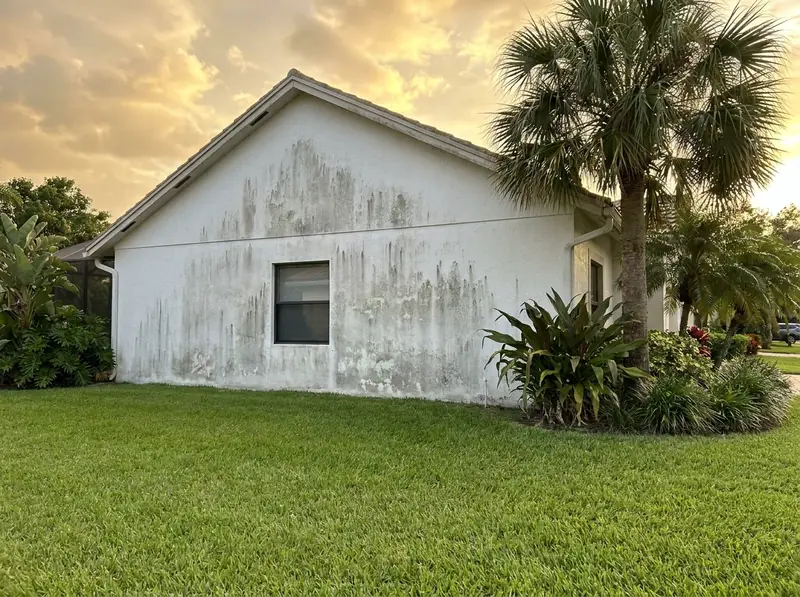
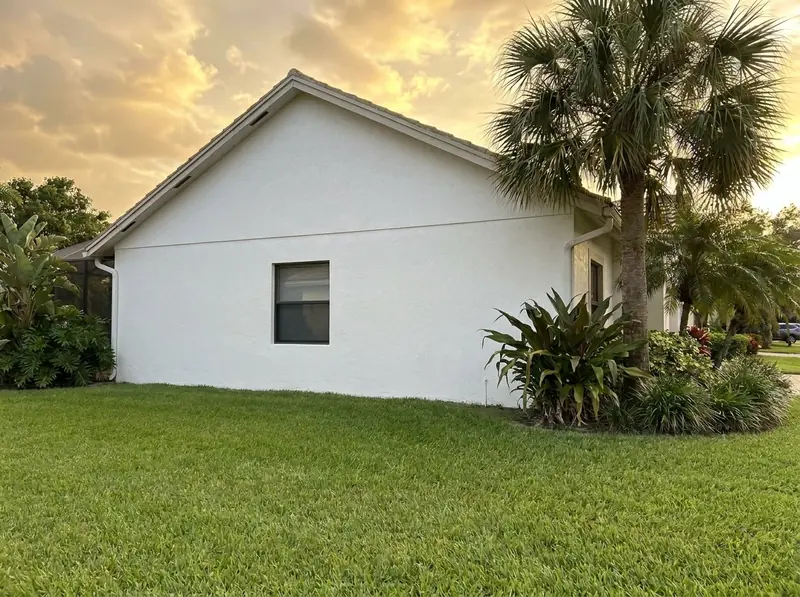 BeforeAfter
Drag to compare. Illustration; your crew sends real before-and-after photos of your own home.
See my price →