

Short answer: Not every surface around a Florida home gets the same treatment. Here's exactly which surfaces need soft washing and which can handle pressure washing, and why
The question we get more than almost any other: "Do I need soft washing or pressure washing?" The honest answer is that most Florida homes need both, just on different surfaces. Getting that split wrong is how you end up with cracked pavers, voided roof warranties, and a stucco wall that starts peeling six months later.
Florida is not like the rest of the country when it comes to exterior cleaning. The salt air, the humidity that never really lets up, the algae that comes back faster than anywhere else, the specific materials builders use here, all of it changes the equation. A cleaning method that works fine on a brick colonial in Ohio can destroy a Daytona-area home in one afternoon. So let's go surface by surface and settle this once and for all.
What the Two Methods Actually Do Differently
Pressure washing is exactly what it sounds like: high-pressure water, delivered fast, breaking apart surface contamination through sheer physical force. It works well on hard, dense, nonporous materials that can absorb the impact without damage. Think bare concrete slabs, certain natural stone, clay brick. The force is the point.
Soft washing flips the approach entirely. The pressure stays low, closer to what comes out of a garden hose, and the work gets done by the cleaning solution rather than the water. The chemistry targets algae, mildew, mold, and biological growth at the root, killing it rather than blasting it off. Because the solution penetrates the surface instead of hammering it, the results tend to last longer too. You're not just pushing growth from one place to another. You're eliminating it.
Puma says: Because the solution penetrates the surface instead of hammering it, the results tend to last longer too.
In a temperate climate, this distinction matters. In Florida, it matters enormously. Salt spray off the coast deposits residue on every surface facing the water. Humidity keeps things damp enough for algae and mold to grow year-round instead of just seasonally. The biology that soft washing targets is more aggressive here, more persistent, and more likely to be living inside porous material rather than just sitting on top of it. That's why we default to soft washing on far more surfaces than a typical cleaning company in a dry climate would.
Surfaces That Need Soft Washing Around a Florida Home
Start with the roof. Barrel tile roofs are everywhere in Florida developments, and they cannot be pressure washed without voiding the manufacturer's warranty. The tiles themselves are brittle enough that high pressure cracks them, but even when the tile survives, the impact dislodges the granule coating that protects against UV and water intrusion. Soft washing cleans a barrel tile roof thoroughly without touching that protective layer. If a company shows up with a pressure wand pointed at your tile roof, stop them before they start.
Stucco exteriors are the next big one. Most Florida homes have stucco on the facade, and stucco looks solid but it's a textured, somewhat porous finish. Pressure washing drives micro-fractures into that surface. Those cracks might be invisible to the eye right after the job, but Florida's moisture finds them fast. Water gets in, the substrate behind the stucco starts to degrade, and within a season or two you're looking at bubbling, cracking, and paint failure. Soft washing cleans stucco without the mechanical trauma. It's slower, but the surface stays intact for years instead of months.
Puma says: Water gets in, the substrate behind the stucco starts to degrade, and within a season or two you're looking at bubbling, cracking, and paint failure.
Screen enclosures around lanais are another case where pressure washing has no business being the tool of choice. The aluminum framing on Florida screen enclosures is not built to take a direct blast. Even at moderate pressure, you risk bending the frame, tearing the screen, and popping the corner connectors. We soft wash screen enclosures to clear out the mildew, the pollen, the organic buildup that Florida weather puts on them, without putting any structural stress on the frame. It's one of the more satisfying jobs because the difference before and after is dramatic, and the enclosure comes through it undamaged.
Pool decks, especially ones finished in travertine or set with pavers, need soft washing for a reason that goes beyond just the surface. Travertine is naturally porous, and pressure washing opens those pores wider. Around a pool, that's a serious problem because you're exposing more surface area to chlorinated water and, on coastal properties, salt water. That chemistry accelerates deterioration in ways you don't see immediately but absolutely feel in the long-term lifespan of the material. Soft washing handles the algae and mold that pool decks grow fast without carving new channels into the stone for pool chemicals to exploit.
That permeability is intentional, part of how they handle Florida's heavy rain load.
The same principle applies to concrete pavers throughout Florida developments. A lot of these pavers use permeable, porous binders between the stones. That permeability is intentional, part of how they handle Florida's heavy rain load. Pressure washing breaks down those binders, pulling the sand out and destabilizing the whole surface. We've had customers come to us after another company pressure washed their paver driveway and left them with pavers that were rocking underfoot within a year. Soft washing keeps those binders intact.
Dock wood and marine-exposed lumber are the last category in this section, and they might be the most sensitive of all. If you have a dock, a boat lift, or any wooden structure sitting over or near Florida water, soft washing is the only appropriate method. High pressure on waterlogged, humidity-exposed wood lifts the wood fibers. Once those fibers are raised and separated, moisture gets in deeper, the wood dries unevenly, and rot accelerates. On a dock that's already living in a harsh environment, that kind of damage compounds fast. Soft washing removes the algae, the mildew, the salt residue, without tearing up the wood itself.
Where Pressure Washing Is the Right Call
Pressure washing earns its place on dense, sealed, nonporous surfaces where you're trying to remove embedded dirt, oil, or hard mineral deposits that a chemical solution alone won't lift. On a Florida property, that usually means exposed concrete.
A plain concrete driveway, the kind poured as a single slab, can handle pressure washing because the material is dense enough to absorb the impact without fracturing. You'll see the difference immediately. Oil stains, tire marks, years of ground-in grime come up in a way that soft washing alone wouldn't accomplish. Here's the thing to know though: pressure washing concrete in Florida's heat opens the surface, and if you don't seal it afterward, you've just made it more hospitable to whatever grows next. The cleaning is real. So is the follow-up cost if you skip the sealant step. It's worth factoring that into your decision, especially if you're on a tight budget and were hoping pressure washing would be a low-maintenance choice.
Puma says: The consequences of pressure washing the wrong surface are always worse than the consequences of soft washing a surface that could have tolerated pressure.
Brick surfaces, where they exist in Florida, can generally handle pressure washing. Raw clay brick is dense and nonporous in a way that stucco and stone are not. Same with certain natural stone pavers that are sealed and nonporous, though you need to know the material before assuming. If there's any doubt, err toward soft washing. The consequences of pressure washing the wrong surface are always worse than the consequences of soft washing a surface that could have tolerated pressure.
Concrete pool surrounds, as distinct from travertine or paver pool decks, can sometimes be pressure washed if they're in good structural condition and properly sealed. This is a judgment call that depends on age, existing cracks, and the finish. We look at every pool deck individually before we decide.
The Florida-Specific Factors That Change the Calculus
Here's something worth understanding about why Florida cleaning decisions look different from what you might read in a general guide online. The biology is more aggressive. Algae, mold, and mildew grow faster here and penetrate deeper into porous surfaces because the climate never gives those surfaces a chance to fully dry out and become inhospitable. When you pressure wash a surface that has deep biological growth, you're removing the top layer and leaving the roots behind. The growth comes back faster than it would with soft washing, which kills the biology rather than just shaving it off.
Salt spray is the other Florida-specific factor that shapes almost every decision we make on a coastal or near-coastal property. Salt deposits on surfaces create a slightly acidic environment that weakens certain materials over time. Soft washing solutions are formulated to neutralize and remove salt deposits along with the biological growth. Pressure washing moves them around without necessarily eliminating them. On a property that's half a mile from the Atlantic or the Gulf, that distinction matters more than most homeowners realize until they've watched their stucco or their pavers age faster than they expected.
HOA restrictions are also worth naming here because they affect more Florida homeowners than people assume. Many community associations in Florida restrict or outright prohibit pressure washing on certain surfaces, particularly stucco exteriors and common-area pavers, because of documented damage patterns. Soft washing is generally the permitted method in those governing documents. If you're in a managed community and you're not sure what your HOA allows, it's worth checking before any cleaning work starts. We've worked with enough HOA clients to know that the rules vary by community but the pattern of preferring soft washing is consistent.
Take a typical scenario: a homeowner in a Port Orange community has a barrel tile roof, a stucco exterior, a paver driveway, a screen enclosure, and travertine around the pool. That's a home where essentially every surface calls for soft washing. The only candidate for pressure washing might be a rear concrete pad behind the garage. Understanding that breakdown before the job starts is the difference between a home that looks great for three years and one that starts showing damage before the year is out.
The only candidate for pressure washing might be a rear concrete pad behind the garage.
If you're ever unsure which method a surface needs, the safest default in Florida is soft washing. The risk profile is asymmetric. Soft washing a surface that could have handled pressure will clean it slightly less aggressively. Pressure washing a surface that needed soft washing can cause damage that costs far more to repair than the cleaning job cost in the first place. We'd rather err on the side of the gentler method and do a second pass if needed than hand a customer a damaged surface and an explanation of what went wrong.
The bottom line: barrel tile roofs, stucco, screen enclosures, travertine, pavers, and dock wood all get soft washing, full stop. Dense concrete, sealed brick, and certain natural stone can handle pressure washing, but you still need to account for sealing and long-term care. Most Florida homes lean heavily toward soft washing because of what they're built from and where they sit. Any company telling you otherwise either doesn't know Florida materials or isn't thinking about your home past the day they leave.
We get a lot of questions before jobs start. Here are the ones that come up most often.
Questions people ask
Can pressure washing damage my stucco exterior?
Yes, and it often does. Stucco looks solid but it's a textured, somewhat porous finish. High-pressure water drives micro-fractures into the surface that aren't always visible right after the job. Florida's moisture finds those cracks fast, getting behind the stucco and degrading the substrate underneath. You'll see the results within a season: bubbling, cracking, paint failure. Soft washing cleans stucco effectively without the mechanical force that causes that damage.
Will pressure washing void my barrel tile roof warranty?
With most barrel tile manufacturers, yes. The tiles can crack under high pressure, and even when they don't, the impact dislodges the granule coating that protects against UV and water intrusion. Most manufacturer warranties exclude damage caused by improper cleaning, and pressure washing qualifies. Soft washing is the method that preserves both the tile and the warranty because it uses low pressure and lets the cleaning solution do the work.
Why can't I pressure wash my travertine pool deck?
Travertine is naturally porous, and pressure washing opens those pores wider. Around a pool, that's a problem because the enlarged pores expose more material to chlorinated water and, on coastal properties, salt water. That chemical exposure accelerates deterioration significantly over time. Soft washing removes algae and mold from the surface without physically damaging the stone's structure, which keeps the deck in better condition through years of pool use.
My HOA says I need to clean my driveway. Does it matter which method they allow?
It matters more than most people expect. Many Florida HOAs explicitly restrict pressure washing on stucco and paver surfaces because of documented damage patterns in community properties. Soft washing is generally the method those governing documents permit. Before scheduling any cleaning work in a managed community, check your HOA documentation or ask the association directly. We've worked with enough HOA clients to know the rules vary by community, but soft washing is almost always the compliant choice.
Is soft washing safe for my dock and boat lift?
Soft washing is the right method for dock wood and marine-exposed lumber. High pressure on waterlogged, humidity-exposed wood lifts the wood fibers, and once those fibers are raised and separated, moisture gets in deeper and rot accelerates. That's an especially serious problem on a structure that already lives in a harsh environment. Soft washing removes algae, mildew, and salt residue from dock wood without tearing up the surface or speeding up the deterioration process.
Can I pressure wash concrete pavers in my Florida driveway?
Most concrete pavers in Florida developments use permeable, porous binders between the stones, and those binders don't survive pressure washing well. High pressure strips out the sand and weakens the bonding material, leaving pavers that rock underfoot and require releveling within a year or two. Soft washing keeps the binders intact while still removing the algae, mold, and discoloration that Florida weather puts on paver surfaces. If your pavers are showing biological growth, soft washing is the safe call.
Is pressure washing ever the right choice for a Florida home?
Yes, on the right surfaces. Dense poured concrete, such as a plain concrete driveway slab or a rear garage pad, can handle pressure washing and benefits from the stronger mechanical action for removing oil stains and embedded grime. Sealed brick and certain nonporous natural stone are also candidates. The key is knowing your material before you commit to the method. When in doubt in Florida, soft washing is the safer default because the consequences of pressure washing the wrong surface are always more expensive than using the gentler method.
Your house
is next.
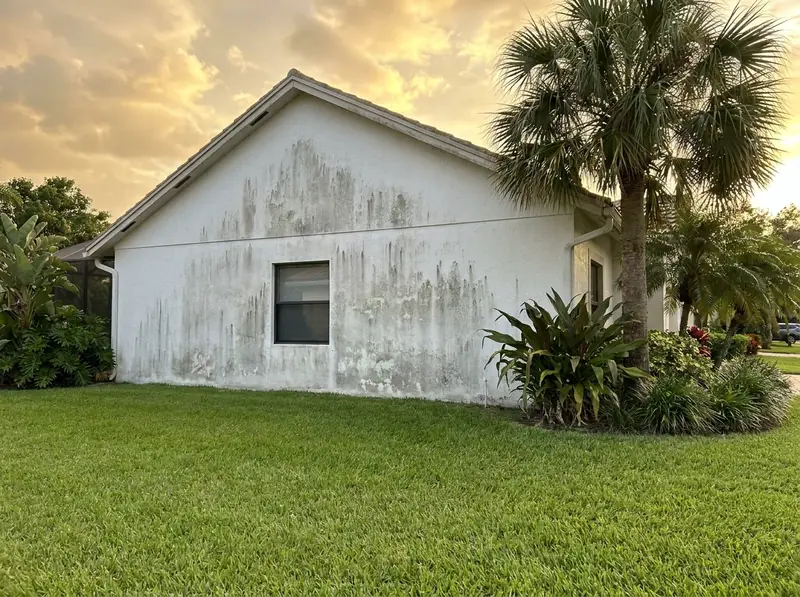
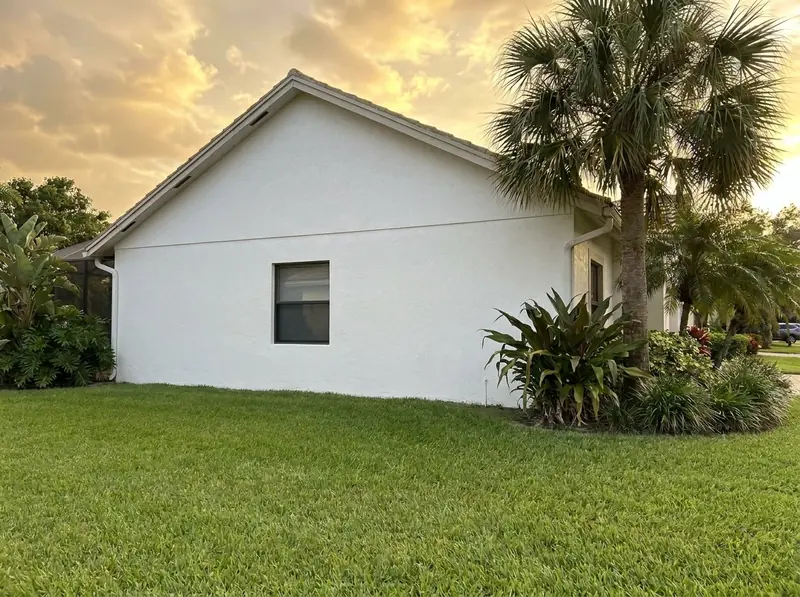 BeforeAfter
Drag to compare. Illustration; your crew sends real before-and-after photos of your own home.
See my price →