

Short answer: Mildew and slippery algae on a patio come from shade and moisture sitting together on the same surface for too long. Green growth on the north side or any shaded part of a property is mildew and algae, and a patio tucked under a roofline or a stand of trees gives both exactly the damp, shaded conditions they need to take hold and spread.
Why shade is the real trigger
Sun dries concrete out fast, and dry concrete is hard for mildew and algae to spread across. The moment a patio sits mostly in shade, whether from a covered lanai roof or overhanging trees, it holds moisture long enough for both to take hold and spread further with wind and regular foot traffic.
Where it gets slippery first
The algae that makes a patio feel slick underfoot tends to build up first in the lowest, shadiest corners, and along any edge where water naturally pools after rain, since that is where the surface stays wettest for the longest stretch of time between storms.
Pavers versus solid concrete
Both pavers and poured concrete patios can grow the same mildew and algae, since it is the shade and moisture that matter most, not the exact material underneath. Paver joints can hold a little more moisture than a solid slab does, which sometimes means growth shows up there first.
How it actually gets removed
Concrete and pavers both take real pressure well, so a surface cleaner run across the patio lifts embedded growth rather than just rinsing the surface film off the top, which is the real difference between a patio that looks clean and one that is actually clean underfoot.
Keeping the slick feeling from coming back
Because shaded patios can regrow algae faster than sunnier surfaces do, a repeat schedule works better than a one-time clean. Puma Pass books the patio every 6 months at 15% off, timed to land before the slippery feeling has a real chance to return.
Mildew versus algae on the same patio
Mildew tends to show up as a flatter, grayish or greenish film across the concrete, while the algae that makes a surface feel slick underfoot is often a bit more textured and concentrated in the wettest spots. Both thrive in the same shaded, damp conditions and both come off with the same real pressure clean, so there's no need for a separate approach for each.
In Volusia County
Volusia County property records show that 56% of homes here were built before 1990 and are old enough for shaded patio corners to have built up years of embedded mildew and algae by the time most homeowners get around to booking their first clean.
Questions people ask
Is the slippery feeling on my patio dangerous?
A slick, algae-covered patio can be genuinely slippery when wet, which is reason enough to get it cleaned rather than wait.
Can pavers just be pressure washed without sealing after?
Cleaning and sealing are separate steps, and sealing is a choice you can make after cleaning rather than something required just to get the surface clean in the first place.
Will trimming back overhanging trees slow the regrowth?
Less shade generally means the surface dries out faster between rains, which can slow how quickly mildew and algae come back after a clean.
Can I just hose the patio off myself between visits?
A hose rinse can clear loose surface debris, but it will not lift mildew or algae that has worked into the concrete's pores the way a real pressure clean does.
Keep reading
Your patio
is next.
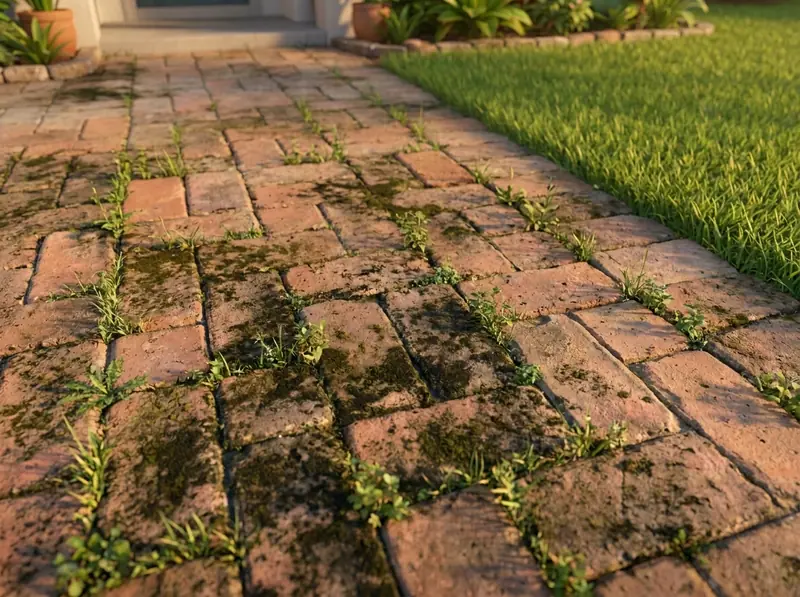
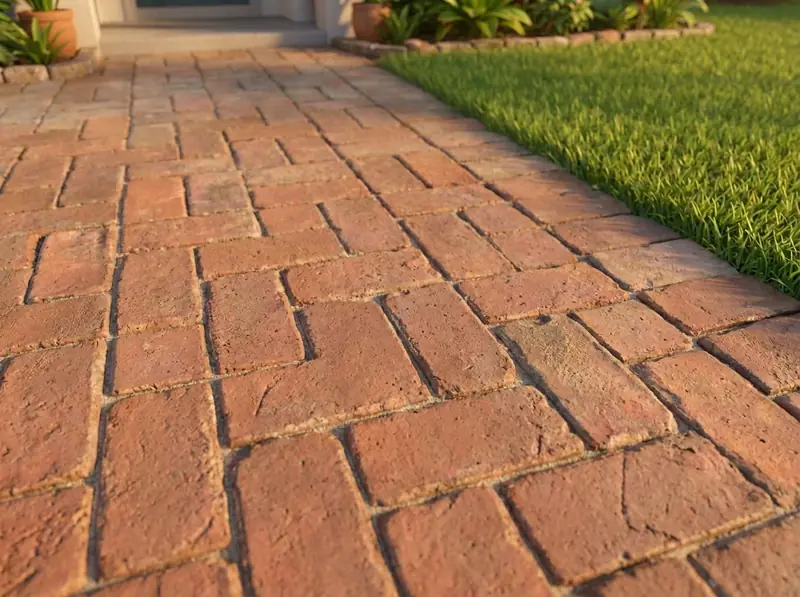 BeforeAfter
Drag to compare. Illustration; your crew sends real before-and-after photos of your own home.
See my price →