
Short answer: Worried about pressure washing near your garden, pets, or children? Here's what's actually risky, what isn't, and when soft washing is the smarter call.
The short answer is: it depends entirely on who's holding the wand and what method they're using. A professional soft-wash job and a homeowner renting a gas-powered pressure washer are two completely different situations, and treating them the same way is where people get into trouble.
We get this question a lot, especially from Florida homeowners with mature landscaping, screen enclosures, koi ponds, and dogs that want to be everywhere at once. The concerns are real. High-pressure water can cause genuine damage to plants, it can agitate pets, and unsupervised equipment around kids is a legitimate hazard. But the answer isn't "never wash your exterior." The answer is knowing which method creates which risks, and how a professional crew manages them.
What High-Pressure Washing Actually Does to Plants
Most people picture pressure washing as just water. Powerful water, sure, but just water. The reality is that a high-PSI stream concentrated at close range does things to plant tissue that no amount of recovery time fixes.
Young trees and ornamental shrubs are especially vulnerable. The outer bark on a sapling or a newly established crape myrtle is thin, and a direct hit from a high-pressure nozzle at close range can strip it away in a second. Once bark is gone, the plant loses its ability to regulate moisture and protect itself from pests. You won't see the damage immediately, but the tree shows stress within weeks.
Puma says: You won't see the damage immediately, but the tree shows stress within weeks.
Ground-level plants and root zones have a different problem. High-pressure water doesn't just hit the surface. It erodes the soil around root systems, compacts it unevenly, and in some cases washes away the feeder roots that sit closest to the surface. For established landscaping in Florida's sandy soil, that kind of disturbance stresses plants that would otherwise be perfectly healthy.
Soft washing solves this at the method level, not just the technique level. Lower working pressure combined with biodegradable surfactants means the cleaning happens chemically rather than by force. The surfactants break down algae, mildew, and organic buildup on your home's surface while the rinse pressure stays low enough that root zones are never disturbed and plant tissue is never at risk. That's not a workaround. That's the actual design of the method.
With a high-pressure rig and whatever detergent the rental place stocks, you don't have that certainty.
Properties with water features get an extra layer of protection from soft washing because the formulas we use are non-toxic to aquatic life. If your home has a pond, a fountain, or any hardscaped water feature near the wash area, that matters. High-pressure runoff from a traditional rig often carries enough concentrated detergent and dislodged debris that it needs to be diverted away from sensitive areas entirely. Soft-wash runoff doesn't carry that risk. It can filter back into the landscaping without harming what's growing there.
One more thing homeowners don't always consider: even if you manage the direct spray perfectly, runoff goes somewhere. With soft washing, we know exactly what that runoff contains and how it behaves in soil. With a high-pressure rig and whatever detergent the rental place stocks, you don't have that certainty. The formulas matter as much as the pressure.
Pets During a Wash Job: What's Actually Risky and What Isn't
Dogs and cats don't process risk the way people do. A dog that's perfectly calm on a normal afternoon can become unpredictable the moment a loud machine starts up near the fence line. The combination of noise, unfamiliar equipment, and strangers moving around the property is a lot for most animals.
For a soft-wash job, the practical answer is simple: keep pets indoors in a room away from the windows facing the work area. That's genuinely sufficient. The working pressure is low enough that accidental contact isn't a serious hazard, the noise level is manageable, and the chemical exposure from our formulas breaks down in soil within a day or two, so there's no extended period where the yard is off-limits after we're done. Your dog can be back outside the same day.
Puma says: Dogs and cats don't process risk the way people do.
Traditional pressure washing is a different situation. The noise from a gas-powered high-PSI machine is significantly louder and carries farther. The spray radius is unpredictable, especially when working on vertical surfaces. And the runoff from chemical detergents used in high-pressure applications can sit in the soil or pool in low spots for long enough that you need to think about when and where your dog re-enters the yard. Indoor-only isn't just courteous to the crew. It's the right call for the animal.
Here's something worth saying plainly: if a crew tells you your pets need to leave the property entirely for the day during a soft-wash job, that's either an overcommunication error or they're using something other than a soft-wash formula. Ask what's in the solution. A responsible operator should be able to tell you exactly what they're applying and how long before the surface and the surrounding area is safe for animal contact again.
Kids, Exclusion Zones, and the Unsupervised Equipment Problem
Children and pressure washing equipment do not mix, and that's true even when a professional crew is on-site. The specific hazard isn't bystander exposure during a job. It's access to equipment before or after the work, when a curious kid gets to a wand or a hose that's still pressurized. Most residential injuries involving pressure washing and children come from exactly that scenario, not from someone standing too close while a technician is actively working.
A professional soft-wash crew manages this differently than a homeowner with a rental rig. The equipment stays under crew control the entire time. When we're on a property, nothing is left unattended and pressurized. But the broader point for parents is this: if you're renting equipment yourself and doing a weekend wash job, the window of risk isn't just the hour you're actively spraying. It's the setup, the breaks, the time the machine is running but you're adjusting something on the roof, and the moment you walk away to answer your phone. Kids are fast.
Puma says: Children and pressure washing equipment do not mix, and that's true even when a professional crew is on-site.
For a professional soft-wash job, the safety requirements for children are genuinely minimal. Normal household activity can continue. Kids don't need to leave, they just shouldn't be underfoot in the immediate work area. That's a meaningful difference from a high-pressure job, which typically requires an active exclusion zone around the entire work perimeter because the spray reaches further, debris can fly at speed, and the noise and pressure create real risk for anyone who wanders in unexpectedly.
We'd put it this way to any parent who asks: during our soft-wash work, keep younger kids inside or in the backyard if we're working the front. That's the common-sense version. If you have a toddler who bolts toward anything interesting, inside is the right call. If you have a twelve-year-old who can follow a simple instruction, they can watch from the porch if they want. High-pressure washing doesn't give you that flexibility. The margin for error is much smaller.
There's also a sensory dimension worth mentioning for families with children who have noise sensitivities or anxiety around loud equipment. Soft washing runs quieter than a high-pressure gas rig. It's not silent, but it's not the jackhammer-level noise that some homeowners describe after a traditional pressure wash job. For some families, that alone makes the method the right choice.
When to Ask About Method Before You Book
Not every surface needs soft washing, and not every property has the same risk profile. A bare concrete driveway with no landscaping nearby, no pets, and older kids is a different situation from a home with a koi pond, a border collie, a three-year-old, and mature azaleas around the foundation.
The question to ask any service provider before they show up is straightforward: what method are you using, and what pressure are you running on my siding, my roof, and around my plant beds? A crew that can answer that specifically is a crew that knows what they're doing. A crew that says "oh, we'll figure it out when we get there" is not the one you want near your landscaping or your family.
Puma says: Soft washing is not always the answer to everything.
Soft washing is not always the answer to everything. A heavily stained exposed-aggregate driveway may need more pressure than a soft-wash rig delivers. The honest version of this conversation acknowledges that. What we'd push back on is the idea that the default should be the highest pressure available unless someone specifically asks for something gentler. Around plants, pets, and kids, the default should run the other way.
The other thing worth knowing is that professional equipment and homeowner rental equipment operate at different calibration levels, and that gap shows up most clearly in safety, not in results. A professional rig is set for specific PSI targets on specific surfaces. A rental rig is set to whatever the rental company last adjusted it to, which may be significantly higher than what your painted wood siding or your screen enclosure can handle. The technician training gap matters just as much as the equipment gap.
If you're not sure which method your property needs, that's the conversation to have before you book, not after.
If your home has all the variables that make this question worth asking, soft washing is almost certainly the right call. More specifically, soft washing done by a crew that can tell you exactly what's in the solution, what pressure they're running, and what the property will look like when they leave. That combination is what makes the difference between a clean house and a problem you're dealing with for the rest of the season.
Bottom line: soft washing is safe around plants, pets, and kids when done correctly, because the method is designed for exactly those conditions. High-pressure washing is manageable with a professional crew and a property that doesn't have sensitive landscaping or small children, but it requires more active management of who's where and when. Know which one is showing up at your house before the truck pulls in the driveway.
If you're not sure which method your property needs, that's the conversation to have before you book, not after.
Still weighing your options? Here are the questions we hear most often before someone schedules their first wash.
Questions people ask
Is soft washing safe for my vegetable garden if it's close to the house?
Yes, with one practical step: let us know the garden is there before we start. Our soft-wash formulas are biodegradable and break down in soil within a day or two, so drift or runoff near vegetable beds isn't a chemical hazard. That said, we'll adjust our spray angle to minimize any contact with edible plants as a matter of practice. The root zone is safe from erosion because soft washing works at low pressure. If you have raised beds right against the foundation, point them out when we arrive and we'll plan the rinse direction accordingly.
How long after a soft wash job before my dog can go back in the yard?
The same day, in most cases. Soft-wash formulas are designed to break down in soil quickly, and the surfaces themselves are safe for pet contact once they're dry, which typically happens within a few hours in Florida's heat. We don't recommend letting your dog run the perimeter while work is actively in progress, mostly because of the noise and the crew moving around. But there's no extended waiting period the way there can be with some high-pressure chemical applications. If you have a specific concern about your dog's sensitivities, ask us before we start and we'll walk you through exactly what we're applying.
Can my kids be home during the pressure washing appointment?
For a soft-wash job, yes. Keep them inside or away from the immediate work area, but they don't need to leave the property. For traditional high-pressure washing, we'd recommend keeping kids inside and away from windows facing the work area, because spray can carry debris at speed and the exclusion zone needs to be respected. The method matters here more than anything else. If you're booking with us and your home qualifies for soft washing, the disruption to your household routine is minimal. If you're unsure which method applies to your exterior, that's worth sorting out before the appointment.
Will soft washing hurt my koi pond or pool if it's near the house?
No. The soft-wash detergents we use are non-toxic to aquatic life, which makes them safe for properties with ponds, fountains, or any water features that could receive runoff. This is one of the clearest practical advantages of soft washing over high-pressure methods, where chemical runoff often needs to be actively diverted away from water features. We still exercise care with spray direction near any open water, but the formula itself isn't a hazard to fish or other aquatic life. If your pool is nearby, the same principle applies: the chemistry is safe, and we work around open bodies of water as a standard part of the job.
What happens to my landscaping if a pressure washer hits it directly?
It depends on what's hit and at what distance. Young trees, ornamental shrubs, and ground cover are the most vulnerable. High-pressure water at close range can strip bark from woody plants, tear leaf tissue, and erode the soil around surface root systems. The damage doesn't always show immediately, but stressed plants make it visible within weeks. Established, mature plants with thick bark handle incidental contact better, but they're still not immune to soil erosion around their root zones. This is why soft washing is the right method for any home with active landscaping near the foundation or along the walls being cleaned. The risk to plants from a properly run soft-wash job is effectively zero.
Is it safe to pressure wash a roof, or does that damage shingles?
High-pressure washing on a shingle roof causes real damage. It strips the protective granules from asphalt shingles, shortens roof life, and can void manufacturer warranties. Soft washing is the correct method for roof cleaning. It removes algae, lichen, and mildew with a low-pressure chemical application that doesn't disturb the shingle surface. If a company quotes you a roof cleaning job and they're planning to use a high-pressure rig on your shingles, that's a problem worth pushing back on before they start. A clean roof and an intact roof are not mutually exclusive, but the method has to match the surface.
How do I know if a company is using a genuinely safe formula or just calling it soft washing?
Ask them two direct questions: what is the PSI they're running on your siding or roof, and what's in the cleaning solution. A legitimate soft-wash operation uses biodegradable surfactants and runs at low pressure because that's what makes the method work. If they can't tell you what's in the solution or they're vague about pressure settings, that's a signal. The term "soft washing" gets used loosely in this industry. The honest version involves specific, answerable questions about equipment and chemistry. A company that's actually doing it right will have no trouble answering both.
Your house
is next.
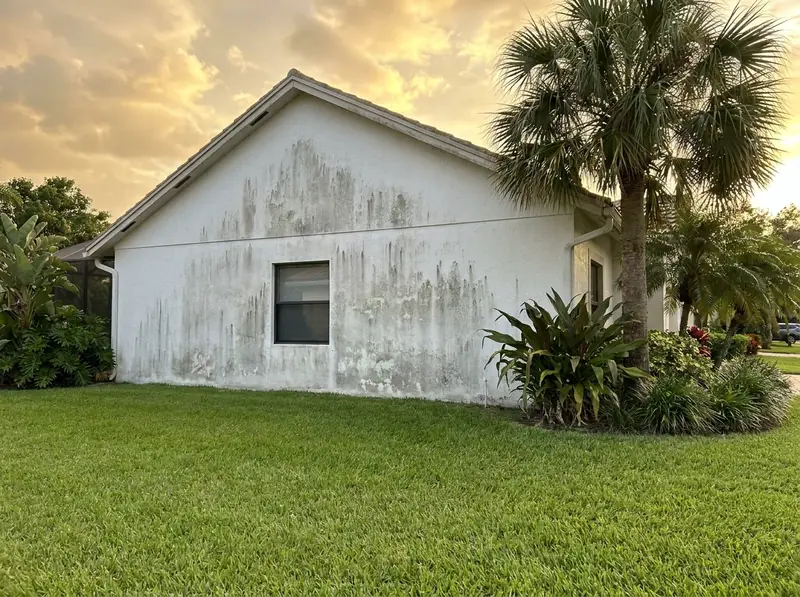
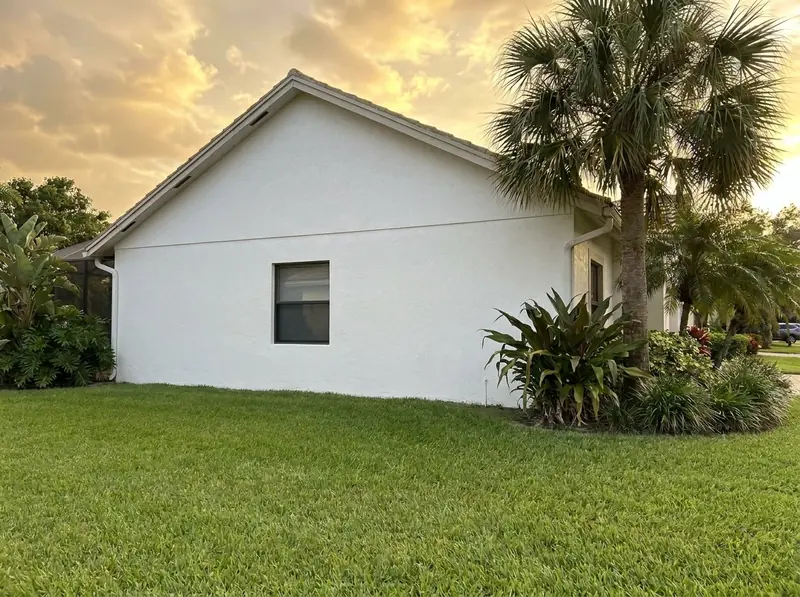 BeforeAfter
Drag to compare. Illustration; your crew sends real before-and-after photos of your own home.
See my price →