

Short answer: A pool deck gets cleaned with real pressure and a surface cleaner on the concrete or paver surface itself, since that material can take it, while an attached pool cage's aluminum frame and screens get a gentle soft wash instead. Pool decks tend to grow algae faster than almost any other surface on a property because they stay wet and shaded far more often.
Why pool decks get dirty so fast
A pool deck rarely fully dries out between splashes, backwashing, rain, and shade from the house or a cage overhead, and that constant moisture is exactly what algae and mildew need to take hold. It's a big part of why pool decks are often the dirtiest hard surface on a property even when everything else looks clean.
Green, slippery growth right at the water's edge is usually the first sign, since that band stays wettest the longest, and it can get slick enough to be a real slip risk before it's visually obvious anywhere else on the deck.
Cleaning the deck itself
Concrete or paver pool decks handle real pressure well, and a surface cleaner, the flat rotating attachment that spreads pressure evenly, gets an even result across the whole deck instead of the stripes a narrow wand leaves behind. That's the same approach used on a driveway or patio.
For a DIY pass, a stiff broom, water, and a labeled outdoor cleaner left to dwell before rinsing handles light growth reasonably well, though it takes more scrubbing to match what a surface cleaner does on a deep clean.
Why the cage gets a different treatment
If your pool deck sits inside a screened cage, the aluminum frame and screening need a gentle soft wash rather than pressure. Pressure can tear screen mesh or work seals loose at the frame joints, damage that's expensive to fix compared to the cost of cleaning it correctly the first time.
So a single pool area visit often uses two different methods on two different materials just a few feet apart: real pressure on the deck, soft wash on the cage.
Keeping pool chemicals out of it
Whatever cleaner touches the deck near the water should stay away from the pool itself, and any cleaning done close to the pool's edge should account for the chemicals already balanced in the water. Following the label on any product used, and keeping it away from the water, avoids throwing that balance off.
Rinsing thoroughly after cleaning also limits how much of anything ends up running toward the pool in the first place.
Keeping it clean longer
Because pool decks stay wet more than most surfaces, they tend to need attention more often than a driveway or patio on the same property. A regular schedule catches the slick, algae-heavy band near the water before it becomes a slip hazard.
Puma Pass rebooks a property every 6 months at 15% off, which fits a pool deck's faster regrowth better than a once-a-year visit would.
In Volusia County
Volusia County property records show 18% of homes in the county have a pool and 15% have a screened cage, and Puma's price list puts a typical pool deck and cage clean at $275.
Questions people ask
Why is my pool deck slippery even after rinsing?
A quick rinse knocks off loose dirt but doesn't kill the algae underneath, which regrows fast in a spot that rarely dries out. A cleaning solution that kills it at the root holds up longer than water alone.
Can pressure washing damage my pool cage?
The aluminum frame and screening can tear or loosen under real pressure, which is why the cage gets a soft wash instead while the deck itself gets pressure.
Will cleaning the deck affect my pool water?
Keeping cleaner away from the water and rinsing thoroughly limits any effect on the pool's balance. Anything applied close to the edge should follow its label with that in mind.
How often does a pool deck need cleaning?
More often than most surfaces, since it stays wet longer. Puma Pass rebooking every 6 months at 15% off fits that faster regrowth.
Keep reading
Your pool cage
is next.
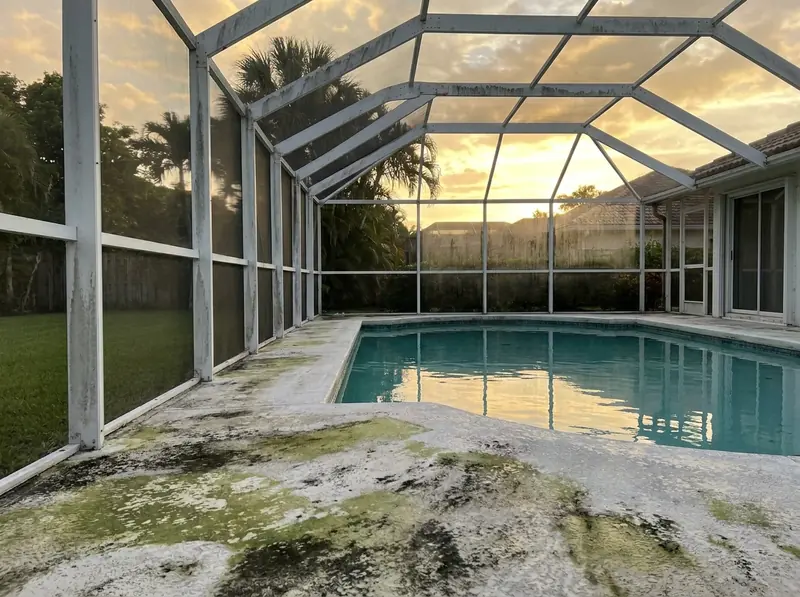
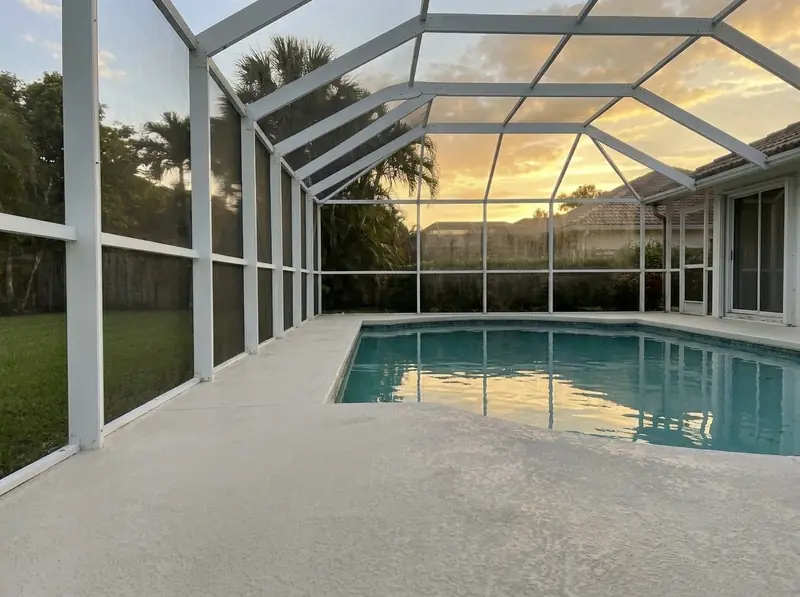 BeforeAfter
Drag to compare. Illustration; your crew sends real before-and-after photos of your own home.
See my price →