

Short answer: Soft washing is cleaning a surface with a specialized solution at low pressure instead of blasting it with high-pressure water. The solution does the actual work of killing mildew, algae, and mold, and a gentle rinse afterward washes it away, which is why soft washing is the standard method for roofs, stucco, siding, and brick.
How it's different from pressure washing
Pressure washing relies on the force of the water itself to physically blast dirt off a hard surface like concrete. Soft washing flips that: the cleaning solution breaks down what's growing on the surface, chemically rather than by force, and low pressure is only there to rinse the result away.
That distinction matters because some surfaces can't handle real pressure. High pressure on a roof can strip the protective granules off shingles. On stucco, it can crack the finish. On siding, it can force water behind the panels where it doesn't belong.
What soft washing actually kills
The black streaks on a Florida roof are usually Gloeocapsa magma, an algae that feeds on the limestone filler in shingles and spreads by wind. It thrives in heat, humidity, and shade, which describes most Florida roofs for a good part of the year.
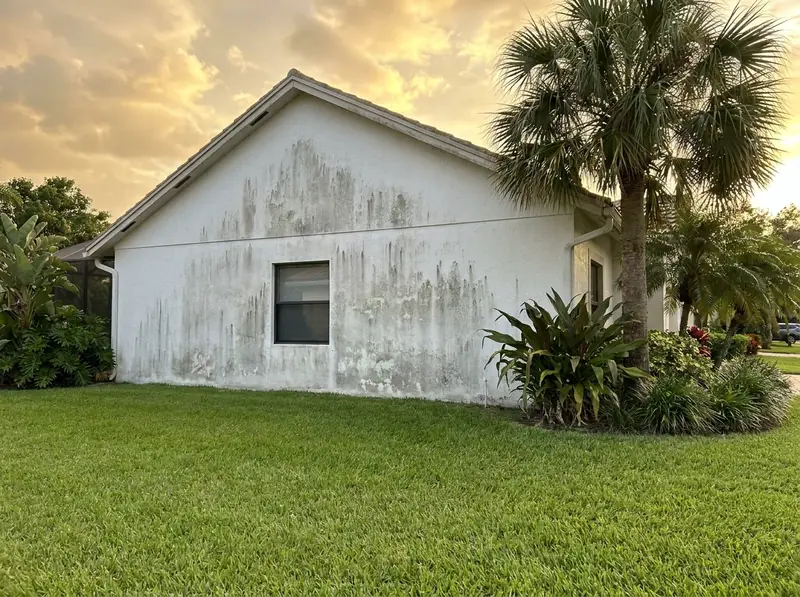
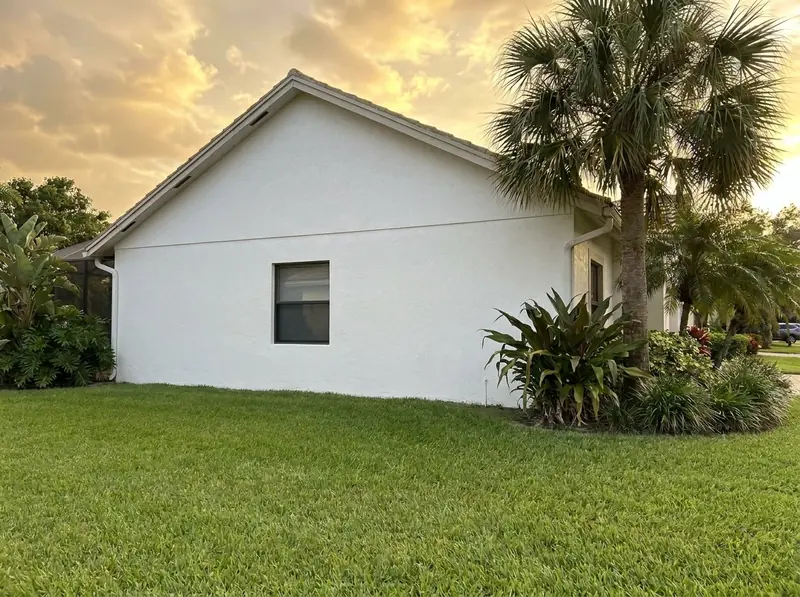
On walls, green streaking on the north and shaded sides is typically mildew and algae rather than plain dirt. A soft wash solution is built to kill that growth at the surface, not just rinse the visible green away and leave the roots behind.
Where soft washing is used
Roofs, stucco, vinyl siding, block, and brick all get soft washed. The material doesn't change the approach: it's always a cleaning solution at low pressure, followed by a gentle rinse.
Screened porches and lanai frames get the same soft wash treatment for the aluminum and screening, since pressure can tear screens or loosen frame seals.
Where it isn't used
Concrete driveways, sidewalks, and patios are tough enough to handle real pressure, so they're cleaned with a surface cleaner instead, the flat rotating attachment that spreads pressure evenly across a hard surface. Pool decks get the same real-pressure treatment on the deck itself.
So a single property visit can involve both methods: a soft wash on the house and roof, and real pressure on the driveway and pool deck, matched to what each surface can actually handle.
What to expect during a visit
Plants and grass near the house get wet down before the wash and rinsed after, so the runoff doesn't sit and stress them. Pets are fine to stay inside.
A soft wash visit usually opens the same way a pressure wash one does: a test area first, so you can see the result before the rest of the job happens.
In Volusia County
Volusia County property records cover 235,236 homes. Of those, 77% have shingle roofs, the material soft washing protects best from losing its protective granules to high pressure.
Questions people ask
Is soft washing safe for my roof?
Yes, soft washing is the recommended method for a roof, since it cleans without the high pressure that can strip granules off shingles.
Does soft washing use bleach?
A soft wash relies on a cleaning solution formulated to kill mildew and algae, not on force. What's used and how it's applied follows that product's own label rather than a fixed recipe.
How long does a soft wash last?
Most houses hold their clean look for 6 to 12 months before mildew and algae start showing again, sooner near the beach or under heavy shade.
Can soft washing hurt my plants?
Plants get wet down before the wash and rinsed after as a standard part of the visit, which limits how long any runoff sits on them.
Keep reading
Your house
is next.
 BeforeAfter
Drag to compare. Illustration; your crew sends real before-and-after photos of your own home.
See my price →