

Short answer: Green algae and black mold on a pool deck come from the same basic cause: a surface that almost never fully dries out. Splashed pool water, shade thrown by the cage overhead, and Florida humidity together keep the concrete damp far longer than most surfaces on the property, and both algae and mold spread easily once a surface stays wet that consistently.
Why the deck is the perfect spot for it
Green growth is mildew and algae, and it tends to show up strongest on north facing or shaded sides of a property, which describes most of a pool deck sitting under its own cage for most of the day. Add splashed water from regular swimming, and the deck barely gets a dry stretch between growth cycles compared with open concrete elsewhere.
Where it shows up first
Grout lines and any low spot that holds standing water tend to green up before the rest of the deck does, since that is exactly where moisture sits the longest after each rain or each swim. Corners tucked under overhanging cage framing, which get the least direct sun through the day, are usually next in line.
What the cage itself picks up
The screen and frame do not grow the same algae the concrete does, but they collect general grime and airborne debris from outside over time, which can look dark or dingy even when it is not the same kind of growth as what is on the deck below it.
How it actually comes off
The deck gets a real pressure clean through a surface cleaner, which gets deep into grout lines far enough to lift growth that a rinse alone would simply leave behind for the next rain. The screen and frame get a gentler clean built for their thinner material, so the whole enclosure comes out looking even instead of a clean floor sitting under a still-dingy screen.
Staying ahead of it
Because the deck rarely gets a real chance to dry out, it is one of the faster surfaces on a property to need a repeat clean. Puma Pass books it every 6 months at 15% off, which is usually well before the growth has a chance to get stubborn again in the grout lines.
Black mold versus green algae on the same deck
Both show up in the same damp, shaded conditions, but they often look a little different once they set in. Green growth tends to spread across a wider area of concrete, while black spots often cluster tighter in grout lines and corners where water sits the longest.
Either way, both come from the same root cause, a surface that does not get to dry out, so the fix for one is the same fix for the other.
In Volusia County
Volusia County property records show that 18% of homes here have a pool and 15% have a screened cage. With 56% of homes here built before 1990 too, older decks with decades of shade and splash exposure are often the ones carrying the most visible buildup in their grout lines by the time they get a first clean.
Questions people ask
Is the green on my deck the same as roof algae?
No. Roof streaking is a different organism that feeds on shingles, while the green on a shaded, wet deck is mildew and algae, which grows on many damp outdoor surfaces around a house.
Will the algae come back right away after cleaning?
It can return faster on a pool deck than on drier surfaces, simply because the deck rarely dries out completely, which is why a repeat schedule works better here than a one-time clean.
Can I scrub it myself between visits?
You can rinse loose debris off between visits, but deep grout line growth usually needs the same pressure and surface cleaner approach a professional visit uses to fully lift it out.
Does chlorine from the pool keep algae off the deck?
Splashed pool water reaches the deck in small amounts and does not clean it the way a real pressure visit does, so a pool nearby does not prevent algae from building up on the surrounding concrete.
Keep reading
Your pool cage
is next.
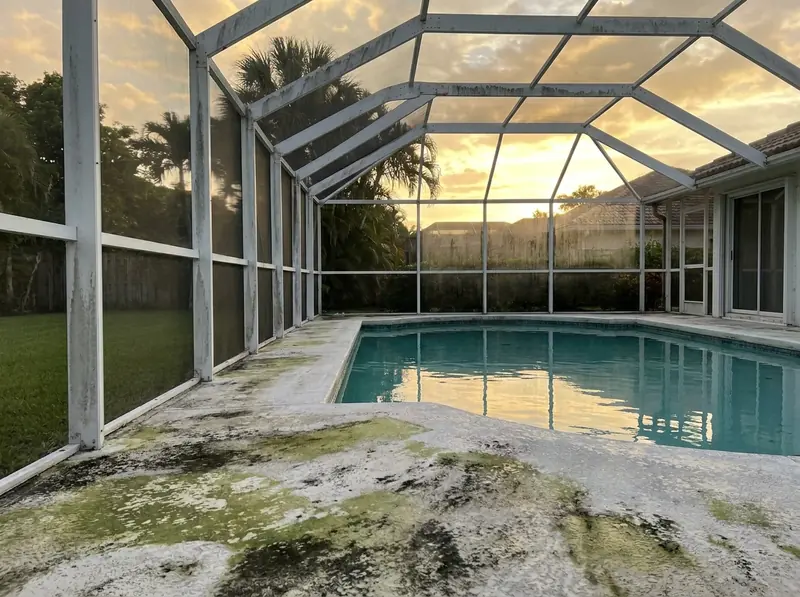
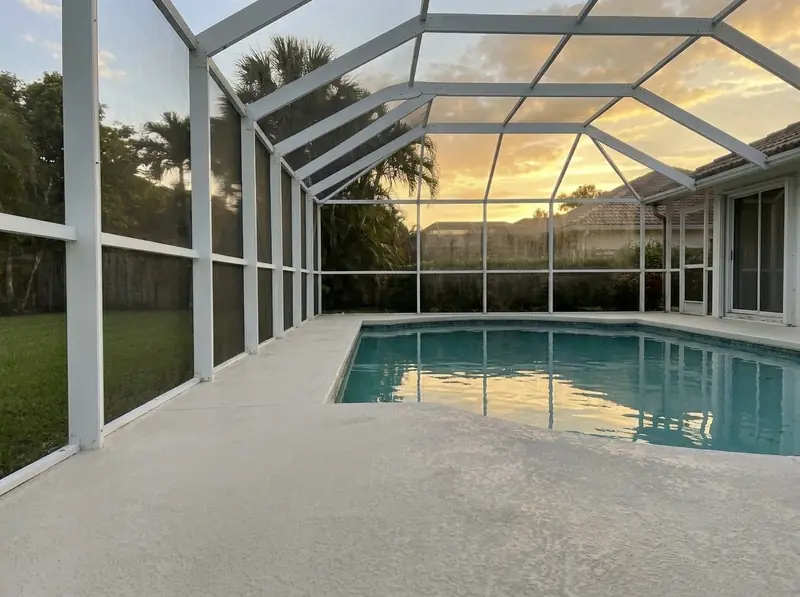 BeforeAfter
Drag to compare. Illustration; your crew sends real before-and-after photos of your own home.
See my price →