
Short answer: Before your pressure washing crew arrives, a few moves make the difference between a perfect clean and a callback. Here's what to clear, shift, and leave alone.
Most prep mistakes happen not because homeowners are careless, but because nobody told them what actually matters. Move the wrong things, leave the wrong things, and you can end up with rust stains, dead plants, or surface damage that outlasts the cleaning itself.
We see this every season. A homeowner spends a Saturday getting their driveway or home exterior professionally washed, and then two weeks later they're calling us back because a chair leg left rust on the concrete or a potted fern turned brown overnight. None of that has to happen. A little preparation, done right, makes the appointment faster, the results better, and the whole thing something you never have to think about again.
Here is exactly what to do before we show up.
Furniture and Outdoor Decor: Distance Is the Key Variable
The instinct most homeowners have is to push patio furniture against the house wall to get it out of the way. That is exactly the wrong move. Furniture stacked against the surface being cleaned traps detergent runoff underneath it, and that pooled chemistry sitting under metal chair legs or table bases is what causes rust staining on your concrete. That stain can outlast the cleaning job itself by months, sometimes longer.
Move furniture away from the work area entirely, not just off to the side. Ten feet of clearance is a reasonable minimum. If you have a garage or covered space, that is the best option. If not, a corner of the yard well away from the structure works fine. The goal is to get everything out of the splash zone, not just out of the direct path of the wand.
Puma says: If you have a garage or covered space, that is the best option.
Potted plants are a separate conversation. People assume that if they turn a pot away from the wall, the plant is protected. In our experience, that is not enough. Cleaning solution becomes airborne during the wash, and that fine mist drifts further than you would expect. We have seen plants take damage from drift alone, even when they were never directly hit. Moving pots eight or more feet away from the work surface is the practical threshold where drift stops being a problem. The heavier the plant, the earlier you want to move it, because it takes two people and a dolly once you are rushed.
Garden ornaments, bird baths, statues, and outdoor speakers all go the same direction: out of the zone. They do not take long to move, but they take much longer to explain after the fact if something gets knocked over by a hose or nicked by pressure at close range.
Leave your outdoor light fixtures in place. We work around them. Same goes for address numbers and mounted mailboxes on the house. Those are not in your prep list.
Driveways, Concrete, and Ground Surfaces: What Needs to Be Cleared First
Driveways are simpler to prep than siding jobs, but they still require a few specific steps that homeowners routinely skip, and then wonder why a spot did not come clean.
The most important one is organic debris. Leaves, pet waste, grass clippings, bird droppings. These need to come off the surface before we arrive, not after. When we apply soft washing solution, it needs direct contact with the concrete or paver surface to break down years of built-up algae and staining. A layer of organic material sitting on top acts as a barrier and interrupts that chemical contact. You do not need to pressure wash the debris off yourself. A leaf blower and a few minutes with a bag is all it takes.
Puma says: You do not need to pressure wash the debris off yourself.
Pet waste in particular matters more than people realize. Beyond the cleaning chemistry issue, it creates a sanitation concern for the crew working the surface. Remove it the day before, not the morning of, so the area has time to air out.
Vehicles are the other thing we want addressed before we arrive. And not just the car parked directly in front of the garage door. A vehicle sitting in the shadow of a wall being cleaned can still take damage from spray that ricochets off the building's base at an angle. Direct spray is the obvious risk, but angled runoff at the bottom of the wall travels further than it looks. Move every vehicle at least one full car length past the edge of the area being cleaned, and confirm there is nothing parked around the side of the house in a position to catch lateral drift.
Trash cans, recycling bins, and garden hoses left on a driveway all go in the garage or along the side fence. They do not take long to move, but they slow us down if they are in the way, and a knocked-over bin leaves its own stain if it has residue inside.
House Siding Jobs: The Details That Actually Differ
Siding and exterior wall cleaning has a separate prep list from driveway work, and the difference matters. The most important item is window air conditioning units. If you have window units installed, they need to come out before a siding wash. Water driven into the gap around a window unit at pressure can get inside the home, and the unit itself can trap cleaning solution against the window frame in ways that cause damage over time. This is not a maybe situation. If you have window units and we are cleaning your exterior walls, the units come out first. We can help coordinate that expectation, but the actual removal is on the homeowner side before our crew arrives.
Outdoor electrical covers are worth thinking about too. Outlet covers and exposed hose bib faucets on exterior walls can allow water to get into the wall cavity if the seals around them are compromised. In our experience, water driven in behind a cover in humid conditions can create the conditions for mold growth and rust on the fasteners, problems that show up weeks after the appointment and are hard to trace back to the cause. We are careful around these, but you should check that all exterior outlet covers are properly seated and that any you know to be loose are taped off before we arrive. Let us know on the day of the appointment, and we will take extra care around them.
Puma says: We are careful around these, but you should check that all exterior outlet covers are properly seated and that any you know to be loose are taped off before we arrive.
If you have recently painted any portion of the exterior, tell us before we begin. Latex paint applied within the last few years is more vulnerable to high-pressure spray than older, fully cured coatings. We adjust our approach based on what we are working with, but we need to know. A pre-appointment conversation is always better than a post-appointment phone call.
Gate hardware and chain-link fence fittings along the perimeter of a job are worth a mention too. Metal hardware that gets water driven into it under pressure, especially in a humid Florida climate, can start showing rust faster than you would expect. We work around gates, but if you have a lock or latch you know is already rough, loosen it and leave it unlatched on the day so we are not forcing water into a piece of hardware that is already compromised.
What Soft Washing Changes About the Prep Process
Not every job we do runs at high pressure. Soft washing uses a low-pressure delivery system with a cleaning solution that does the chemical work instead of relying on force. That changes a few prep considerations in ways that are worth understanding if your appointment is a soft wash rather than a traditional pressure wash.
The biggest benefit on the prep side is landscaping. With a traditional high-pressure wash, decorative mulch and bark ground cover around a home's foundation can get displaced or stripped entirely, and reinstalling it is the homeowner's problem. Soft washing avoids that issue. Because we are not throwing high-volume water at the base of the house, your mulch beds and bark ground cover stay where they are. You do not need to pull them back or cover them before we arrive. This is one of the clearest practical advantages soft washing has over pressure washing for residential exterior jobs, and it is something we hear positive feedback about regularly from customers who have had bad experiences elsewhere.
Puma says: Soft washing uses a low-pressure delivery system with a cleaning solution that does the chemical work instead of relying on force.
Plants in mulch beds still benefit from the same distance rule if they are in pots. Rooted landscape plants in beds along the foundation generally hold up well under a soft wash. Potted plants on a porch or patio are a different situation and still need to be moved, because soft washing solution in concentrated amounts at close range can still stress sensitive foliage.
One thing that does not change between soft washing and pressure washing is the requirement to clear organic debris from the surface being cleaned. The chemistry in a soft wash solution needs direct contact with algae, mildew, and staining to break it down. Debris on top of the surface interrupts that. The leaf blower pass before we arrive matters just as much for a soft wash appointment as for a high-pressure job.
Before you go, these are the questions we get most often in the days leading up to an appointment.
The prep window for a soft wash is also a bit different. Because solution sits on the surface for a dwell period before rinsing, you want to keep pets and children off the cleaned surfaces until we have done the final rinse and the area has had time to dry. We will tell you the timing for your specific job, but plan for a few hours of the area being off-limits. That is not a prep step exactly, but it is worth knowing before the day arrives so you are not caught off guard.
If you are genuinely uncertain whether your job will be a pressure wash or a soft wash, ask us when you book. The answer affects what you need to prep, and we would rather you have the right list going in than deal with questions on the day of the appointment.
The bottom line is straightforward. Move furniture well clear of the work surface, not just out of the direct path. Remove organic debris from driveways and paved areas before we arrive. Pull vehicles past the splash zone. Take out window AC units for siding jobs, and flag any fresh paint or compromised hardware before we start. Do those things, and the appointment runs cleanly, the results hold up, and you do not get a follow-up call you did not want to have.
For most homeowners, the prep takes about thirty minutes. That is a worthwhile investment before a few hours of professional cleaning that is supposed to last a year or more.
If something on this list does not apply to your job, skip it. If something about your specific property does not fit the standard checklist, call us before the appointment. An extra three-minute conversation ahead of time saves everyone a lot of trouble afterward.
Before you go, these are the questions we get most often in the days leading up to an appointment.
Questions people ask
Do I need to move my car if it's parked in the driveway but not directly in front of the garage being washed?
Yes. Move every vehicle well clear of the work area, not just the ones directly in the path of the wand. Pressure washing spray ricochets off building bases and walls at angles, and a car sitting even in the shadow of a structure being washed can catch that angled runoff. One full car length past the edge of the cleaned surface is a safe minimum. Around the side of the house counts too, if the side wall is being cleaned and a vehicle is parked near it.
Is it enough to push patio furniture against the wall to clear the middle of the patio?
No, and this is one of the most common prep mistakes we see. Furniture pushed against the wall being cleaned traps detergent runoff underneath it. That pooled solution sitting under metal chair legs or table bases causes rust staining on concrete that can outlast the cleaning itself. Move furniture completely out of the work area, at least ten feet away, and ideally into a garage or covered space where there is no splash risk at all.
Do I need to pull back my mulch beds before a soft wash appointment?
No. This is one of the practical advantages of soft washing over traditional pressure washing. Because soft washing uses low-pressure delivery rather than high-volume water force, decorative mulch and bark ground cover around your home's foundation stays in place. You do not need to pull it back or cover it before we arrive. Potted plants on the porch or patio are a different matter and should still be moved at least eight feet away due to solution drift.
What should I do about pet waste on the driveway before a pressure washing appointment?
Remove it the day before the appointment, not the morning of. When we apply soft washing solution, it needs direct contact with the concrete surface to break down staining. Organic debris on top of the surface, including pet waste, acts as a barrier that interrupts that contact. Beyond the chemistry issue, it also creates a sanitation concern for the crew. A leaf blower pass and a quick bag cleanup the evening before is all it takes.
Do window air conditioning units need to come out before a siding wash?
Yes. Water driven into the gap around a window unit at pressure can get inside the home, and cleaning solution can pool against the window frame and cause damage over time. Removing units before we arrive is required for siding jobs, not optional. If you need help coordinating the timing, let us know when you book, but the actual removal needs to happen before our crew shows up. We can not safely clean around installed window units.
I just had my exterior painted recently. Is that a problem for pressure washing?
It can be, and you should tell us before we start. Latex paint applied within the last few years is more vulnerable to high-pressure spray than older, fully cured exterior coatings. We adjust our approach based on what we are working with, but we need to know about fresh paint before we begin, not after. A quick note when you book or at the start of the appointment gives us what we need to treat the surface correctly and avoid any damage to new work.
How far do potted plants need to be from the area being washed?
Move them at least eight feet away from the work surface. Turning a pot away from the wall is not enough. Cleaning solution becomes airborne during a wash and drifts as fine mist further than most people expect. Plants that were never directly hit can still take foliage damage from that drift at close range. Eight feet is the practical distance where aerosolized solution stops being a problem for most plant types. Heavier pots are easier to move before the crew arrives than during the job, so plan for those the evening before if you can.
Your house
is next.
 BeforeAfter
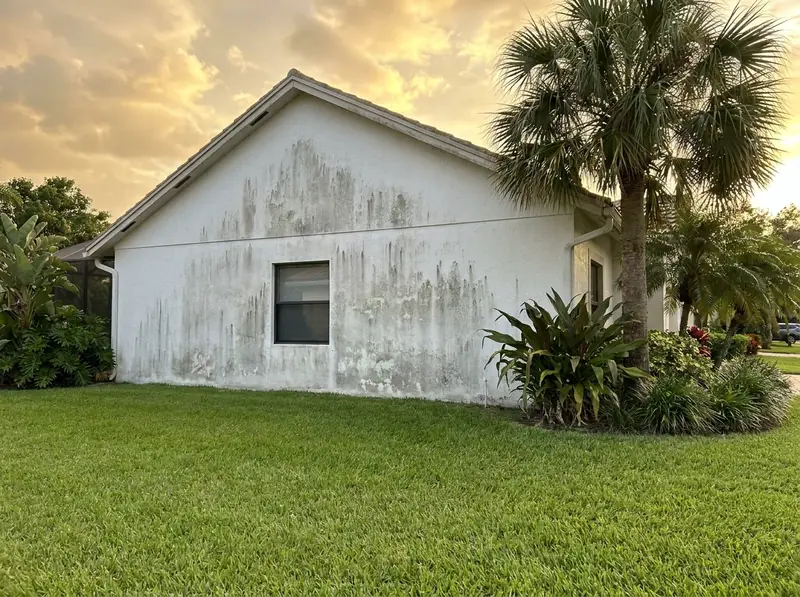
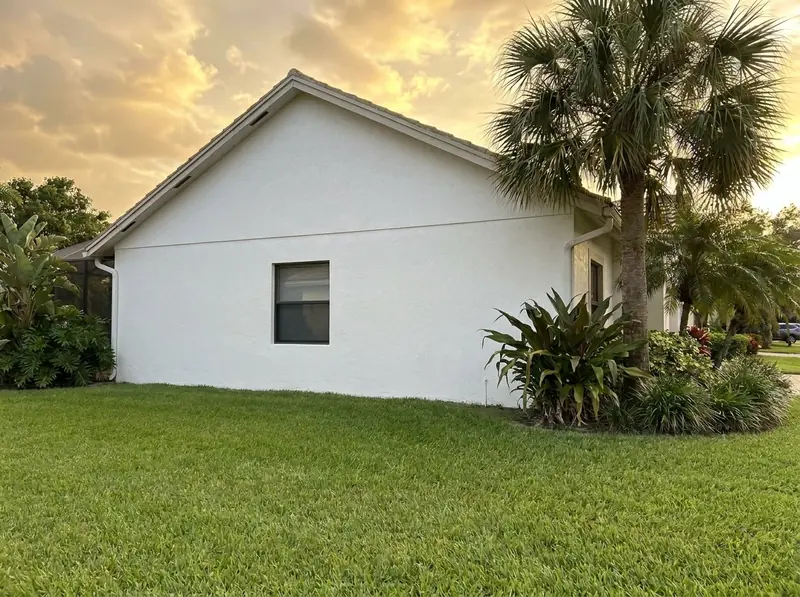
Drag to compare. Illustration; your crew sends real before-and-after photos of your own home.
See my price →