

Short answer: High pressure isn't safe for most house exteriors, which is why houses get a soft wash instead: a cleaning solution at low pressure. Pointed at stucco, siding, block or brick, high pressure can crack surfaces, strip paint and force water where it shouldn't go, and none of that damage is something a second visit can undo.
What can go wrong with high pressure
Stucco can crack under a direct blast, and once a crack forms it tends to widen with every storm afterward. Vinyl and wood siding can lose paint or, worse, let water get forced behind the panels, where it can sit and cause damage you won't see until much later.
That's the core reason houses aren't pressure washed in the first place, no matter how tempting the extra force looks.
Why soft washing avoids all of it
A soft wash uses a cleaning solution at low pressure to break down algae, mildew and grime, then rinses it away. There's enough force to clean but not enough to damage stucco, siding, block or brick, which is why it's the standard method for house exteriors across the industry.
What stays protected during the visit
Plants near the house are wet down before the wash and rinsed after so the cleaning solution doesn't sit on landscaping, and pets stay inside for the visit. Safety here covers more than just the walls themselves, it covers everything around them too.
Screens, light fixtures and window trim are all part of what a soft wash is built to work around safely, since none of those hold up well against a direct high-pressure blast either.
When real pressure is the right call
Concrete driveways and walkways are cleaned with real pressure through a surface cleaner because concrete can handle it and needs that force to lift embedded dirt. That's a different surface and a different tool than your house exterior, not a contradiction of the same underlying rule.
What a safe visit looks like start to finish
The crew starts with a test stripe on a small section before moving to the rest of the house, giving you a look at the result before committing to the whole exterior. That same low-pressure, solution-first approach carries through the entire job from the first stripe to the last rinse.
If a section needs a second pass because of heavier buildup, that's handled with the same low-pressure solution rather than turning up the pressure to save time.
In Volusia County
Across the 235,236 homes in Volusia County property records, the typical house wash prices at $279 using a soft wash on every exterior, regardless of whether it's stucco, block, vinyl or brick. The method doesn't change by material because the risk from high pressure doesn't either, no matter what the house is built from.
Questions people ask
Can a pressure washer damage my house even at a lower setting?
It's possible, especially close to the surface or on older or already-cracked stucco. That's the main reason houses are soft washed instead of pressure washed at any setting.
Will soft washing still remove tough stains?
It handles algae, mildew and general grime well. Old oil stains or deep rust may lighten but not fully disappear, since those aren't organic growth soft washing is designed to break down.
Is it safe for my pets and plants?
Plants get wet down before the wash and rinsed after, and pets stay inside during the visit, so both are protected throughout the whole job.
Does soft washing damage window seals or screens?
The low-pressure approach is built to be gentle on the whole exterior, including trim and fixtures, which is part of why it's used instead of a high-pressure blast.
Keep reading
Your house
is next.
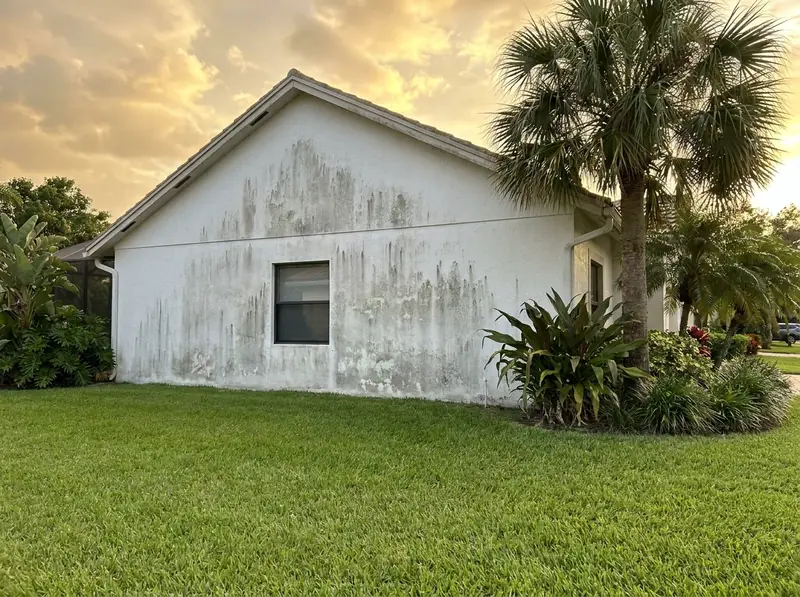
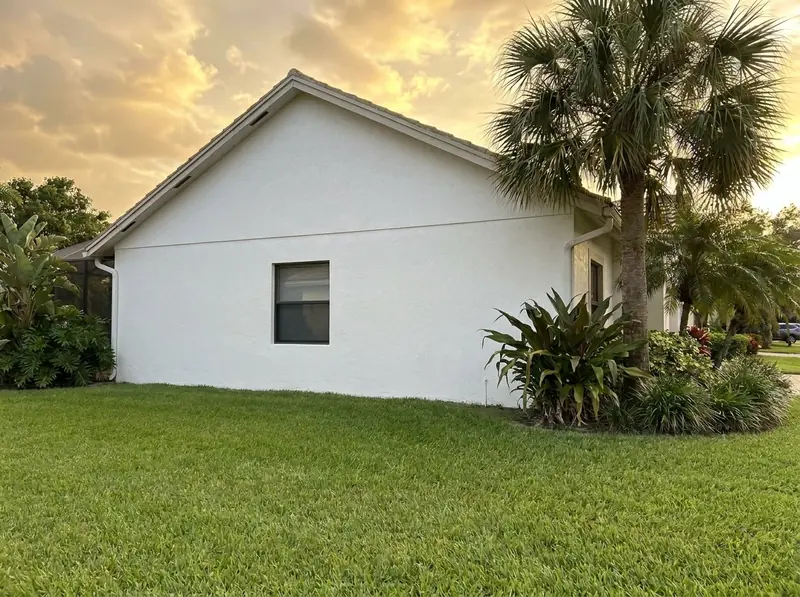 BeforeAfter
Drag to compare. Illustration; your crew sends real before-and-after photos of your own home.
See my price →