

Short answer: Weeds take root in the sand between paver joints, mold and mildew build up in shaded, damp corners, and fading comes from years of direct Florida sun wearing down the surface color. A proper cleaning clears the weeds and mold; fading improves some but is the one issue sealing helps prevent going forward more than cleaning can reverse.
Weeds in the joints
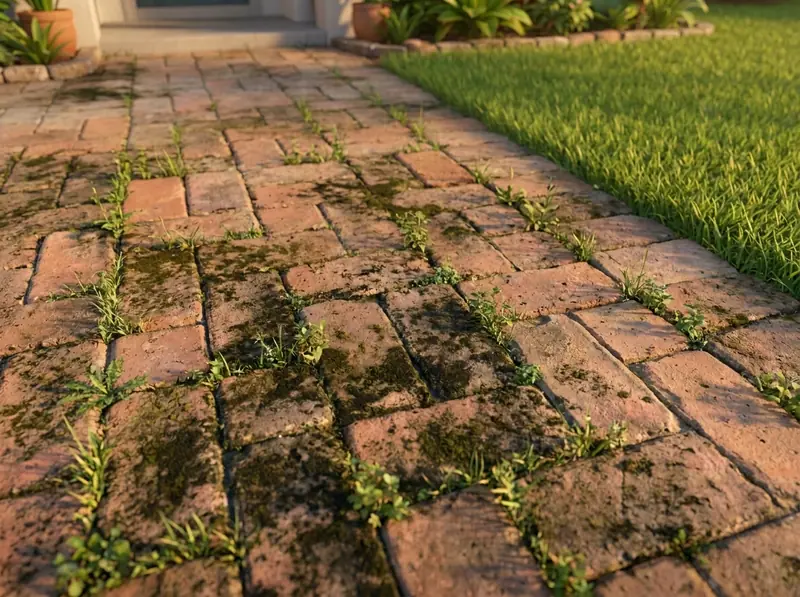
Paver joints are filled with sand, and that sand is exactly the loose, slightly damp material weed seeds need to sprout in. Once roots take hold between pavers, they're hard to pull without disturbing the joint itself, and pulling by hand often just breaks the top of the weed off.
The joints closest to grass or a mulch bed usually see the most weed growth, simply because seeds have the shortest distance to travel.
Mold and mildew in the shade
Any part of a paver patio that sits in shade for most of the day, under a tree or against a shaded wall, stays damp longer and grows mildew and algae faster. It's the same pattern that shows up on driveways and roofs, just on a different surface, and salt air near the coast can make it worse.
Fading from sun and traffic
Years of direct sun break down the surface color of pavers, and heavy foot traffic wears the finish thinner in the paths people actually walk. Cleaning restores a lot of the color underneath, but sun-worn pavers that have faded at a material level won't look brand new again just from a wash.
What cleaning restores versus what sealing protects
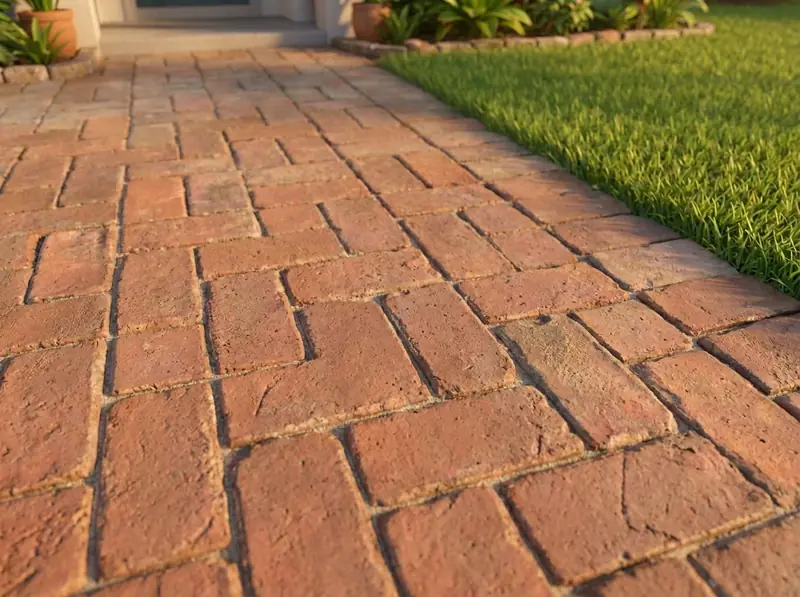
A wash lifts weeds, mold and surface grime and usually brings back a noticeably richer color. Sealing doesn't undo existing fading, but it slows future fading and helps keep weeds and mildew from coming back as fast, which is the trade-off between the two services.
Rust rings near sprinkler heads
Pavers close to a sprinkler head can pick up the same reddish rust rings driveways get, caused by iron in irrigation well water landing on the same spot again and again. It's a separate issue from mold or fading, and it tends to respond the same way rust does on concrete: cleaning lightens it noticeably, but a deeply set ring may not disappear entirely.
In Volusia County
Puma's price list puts a typical patio-style surface clean, the category pavers fall under, at $149: 30 cents per square foot with a $149 minimum. Volusia County property records show 56% of homes in the county were built before 1990. Sun fading is common on original paver work of that age, especially in open, unshaded areas.
Questions people ask
Will cleaning kill the weeds permanently?
Cleaning removes what's growing at the time, but as long as joint sand and moisture are there, new weeds can return. Sealing slows that cycle.
Is the mold on my pavers harmful?
It's outdoor mildew and algae. For any specific health concerns, check with your doctor.
Can faded pavers be restored to their original color?
Cleaning brings back a lot of the color hidden under grime, but sun-worn fading at the material level is honest about its limits: it lightens, it doesn't fully reverse.
Do weeds mean my pavers are installed wrong?
Not necessarily. Weeds in joint sand are common on almost any paver surface over time, and it's more about age and exposure than the original installation.
Keep reading
Your pavers
is next.
 BeforeAfter
Drag to compare. Illustration; your crew sends real before-and-after photos of your own home.
See my price →