

Short answer: Yes, concrete driveways can take real pressure, and that's actually the right tool for the job. Unlike a roof or stucco wall, poured concrete is tough enough for a proper surface cleaner without cracking or wearing down the material.
Why concrete is different from a roof or stucco wall
Roofs and walls get soft washed, a cleaning solution at low pressure, because high pressure can strip roof granules or crack stucco. Concrete is a harder, denser material, and the right amount of pressure lifts algae, mildew and grime without damaging the surface underneath the way it would on a softer material.
That's really the core distinction behind how any surface gets cleaned here: the tool and pressure level are matched to the material, not applied the same way everywhere. A driveway and a stucco wall might sit ten feet apart on the same property and still call for two completely different approaches.
Where it can go wrong
The risk isn't the pressure itself, it's the equipment and technique. A narrow wand held too close, or moved unevenly, can etch stripes into the surface or dig out old, weak mortar joints. A surface cleaner, the flat rotating attachment, spreads the pressure evenly across the concrete instead, which is why it's the tool used on a full driveway rather than a hand-held wand.
What gets protected along the way
Grass and plants at the edge of the driveway get wet down before the wash and rinsed after, so runoff doesn't sit and stress them. Pets are fine to stay inside during the visit; there's no need to plan around them or move anyone out of the house.
The same care applies to anything sitting on the driveway itself, like a mailbox post, a basketball hoop base, or planters near the garage. None of it needs to be moved beforehand; the crew works around what's there.
Stamped or decorative concrete needs a lighter touch
If your driveway has a stamped pattern, exposed aggregate, or a color coating rather than plain gray concrete, tell us before booking. Those finishes can be more sensitive than standard concrete, and the approach gets adjusted accordingly to protect the color or pattern.
How it's confirmed before anything starts
Every job opens with a single clean stripe on the worst part of the driveway. If it doesn't earn a whoa, the crew stops there and you pay nothing, so you get to judge the result on your own driveway before committing to the rest.
What already-sealed concrete needs
If your driveway has a clear sealant on it already, water should bead rather than soak in, and that changes how a cleaning solution and pressure interact with the surface. Mentioning an existing sealant before booking helps the approach get adjusted so the job cleans the grime without stripping a coating that's still doing its job.
In Volusia County
Puma's price list puts the typical driveway clean at $212: 25 cents per square foot with a $149 minimum. Volusia County property records show 56% of county homes were built before 1990 and many driveways are older concrete that has had decades to pick up stains.
Questions people ask
Can pressure washing crack my driveway?
Plain poured concrete in good condition handles a surface cleaner without cracking. Driveways with existing cracks or crumbling edges should be pointed out before the job so those spots get extra care.
Will it remove oil stains completely?
Fresh spots usually lift well. Old, deeply set oil stains often lighten significantly but may not come out completely, since the oil has soaked into the concrete itself.
Is pressure washing safe for my grass and flower beds?
Yes. Plants along the edge are wet down before the wash and rinsed after as a standard part of the visit.
What if I'm not happy with the result?
Before-and-after photos come with every job, and if something looks off once the rest is billed 24 hours later, it's a free re-clean, not an argument.
Keep reading
Your driveway
is next.
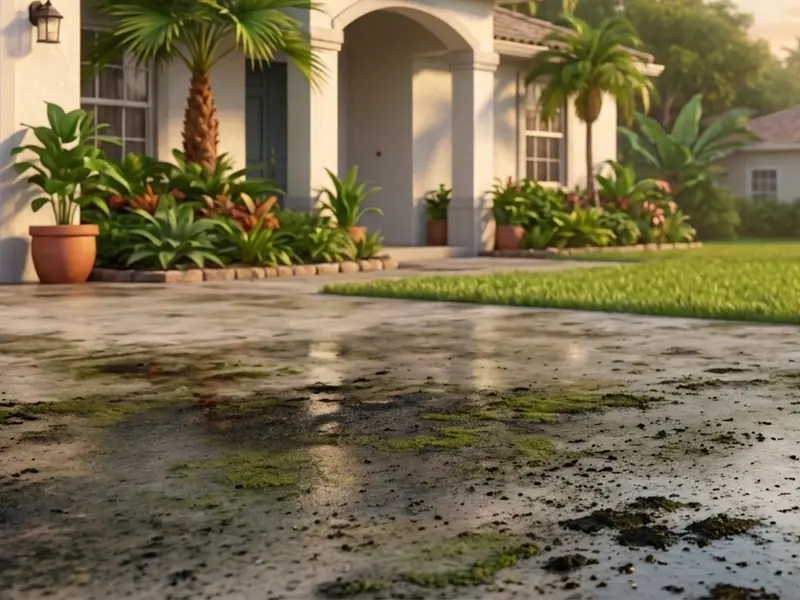
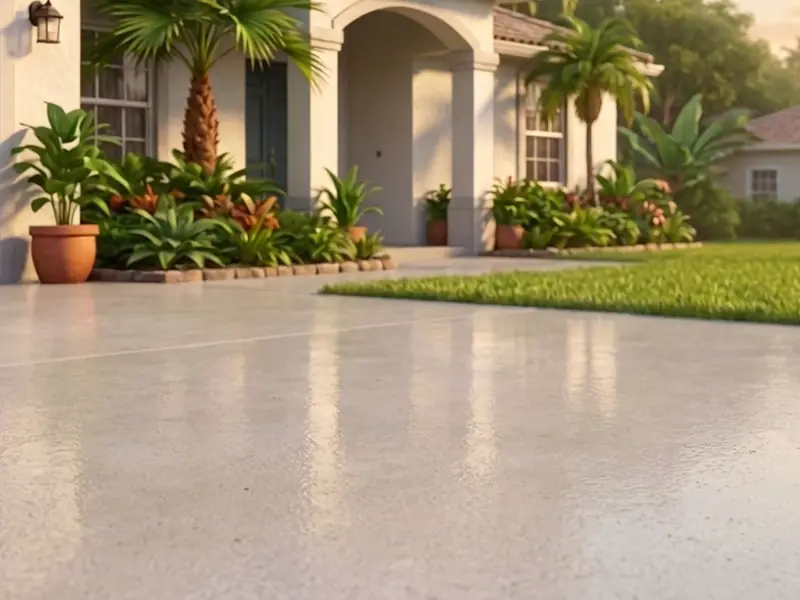 BeforeAfter
Drag to compare. Illustration; your crew sends real before-and-after photos of your own home.
See my price →