

Short answer: Most roofs in Volusia County need cleaning every 2 to 3 years. Roofs under heavy tree shade often need it sooner, since shade keeps the surface damp longer and gives algae a head start over a roof that gets fuller sun through most of the day.
Why roofs stain on a predictable cycle
The black streaking most homeowners notice is an algae that feeds on the limestone filler in shingles and spreads by wind, which means one shaded, algae-prone roof nearby can seed the growth on roofs around it over time. A 2 to 3 year cycle keeps most Volusia County roofs ahead of it.
That predictability is part of what makes the 2 to 3 year window useful: it's frequent enough to catch the algae before it's heavily established, without cleaning a roof that doesn't need it yet.
What shortens the interval
Heavy tree canopy over the roof keeps shingles shaded and damp longer after rain, and Florida's heat and humidity do the rest. A roof in that kind of setting often needs cleaning closer to every 2 years than every 3 years, simply because the growth gets a head start.
What a longer wait costs you
Algae spreads by wind, so a roof left too long doesn't just get a little worse, it can seed growth on other parts of the roof or on roofs nearby. Staying on the 2 to 3 year cycle keeps it from getting that far. The price is still based on the roof's size either way, not on how bad the staining looks.
Does roof age change the timeline?
An older roof that hasn't been cleaned recently is more likely to already show streaking, simply because it's had more time exposed to wind-blown algae. That's a reason to check an older roof sooner rather than assuming it can wait the full 2 to 3 years like a newer one might.
A roof replaced recently, on the other hand, often has a longer stretch before streaking becomes visible at all, since it hasn't had the same years of exposure to wind-blown spores.
Keeping it simple
Puma Pass rebooks a cleaning every 6 months at 15% off across whichever services you choose, and skipping a visit is fine if the roof doesn't need it yet. For most roofs, that just means the pass quietly waits until the 2 to 3 year mark rolls around naturally.
In Volusia County
Shingle roofs make up 77% of homes in Volusia County property records, with tile at 2%, metal at 7%, flat roofs at 3% and other materials at 10%. About 56% of the county's homes were built before 1990 - meaning many roofs have had years of Florida sun, humidity and wind-blown algae to accumulate the staining a cleaning removes.
Questions people ask
Does roof material change how often it needs cleaning?
Shade and humidity matter more than material for how fast algae takes hold, though different materials, like tile, are cleaned with a different price and level of care applied.
What happens if I wait longer than 3 years?
The algae has more time to spread across the roof and, since it travels by wind, potentially to nearby homes too, which usually just means a more visible job when you do book it.
Is yearly cleaning necessary?
For most Volusia County roofs, no. The 2 to 3 year window is typical unless heavy tree shade is speeding things up on your particular property.
Can I tell from the ground if my roof needs cleaning?
Black streaking on the shaded or north-facing slope is usually visible from the ground and is the clearest sign a roof is due for cleaning.
In your town
Keep reading
Your roof
is next.
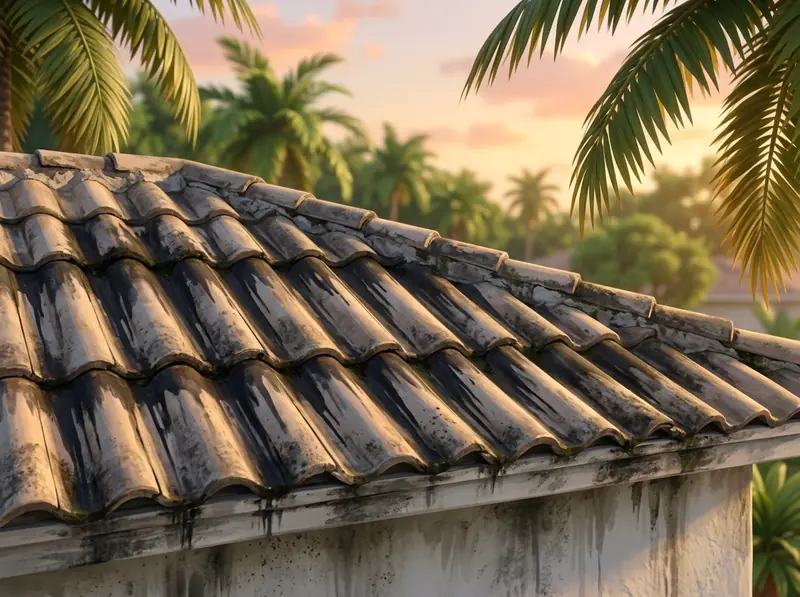
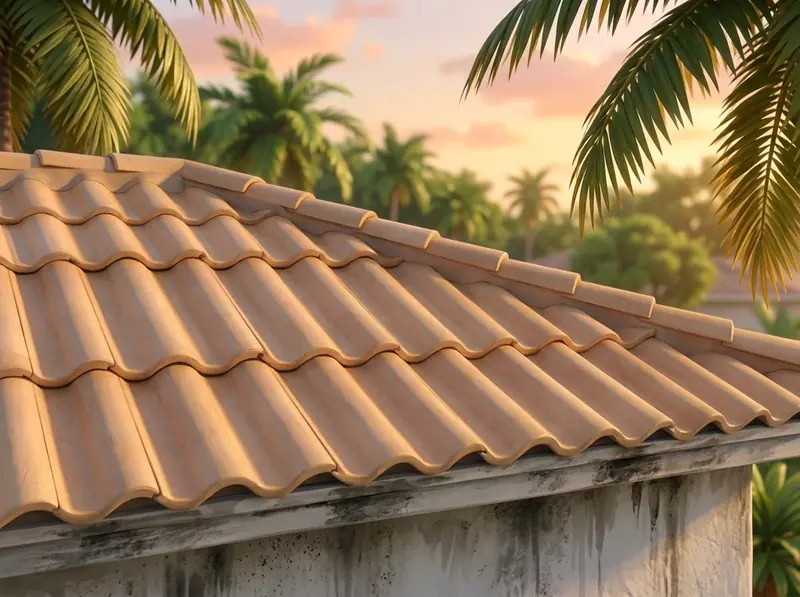 BeforeAfter
Drag to compare. Illustration; your crew sends real before-and-after photos of your own home.
See my price →