

Short answer: Plan on cleaning your driveway every 6 to 12 months. Driveways under tree cover or close to the coast pick up mildew, salt air residue and organic debris faster and often need attention nearer the 6 month mark instead of the 12 month one.
Why Florida driveways get dirty fast
Heat, humidity and shade are a good combination for algae and mildew, and Florida has all three most of the year. Add in sprinkler overspray, pollen and afternoon storms that never fully dry the concrete before the next round of rain rolls in, and a driveway can go from clean to gray-green faster than it would up north.
None of that is unique to any one neighborhood; it's just the climate most of Volusia County shares. A driveway in full sun with no trees nearby is working with a real advantage over one tucked under an oak canopy, even on the same street.
Coastal air adds its own layer
Homes closer to the beach deal with salt air on top of the usual humidity, and that combination can leave a dull film on concrete even without heavy algae growth. If your driveway is within a mile or two of the coast, lean toward the shorter end of the schedule.
Signs it's time before the calendar says so
A driveway that's turning green or gray-black in patches, especially near the grass edges or under a tree, is telling you it's due. Rust-colored streaks from a sprinkler head are a separate issue, often from iron in irrigation well water, and don't necessarily mean the whole driveway needs a wash yet.
What waiting too long costs you
Algae and mildew get harder to lift the longer they sit, since they work into the surface of the concrete rather than just sitting on top of it. Waiting a couple of extra years doesn't mean the driveway can't be cleaned, it just means a longer job and a bigger contrast with a house exterior or roof that's been kept on schedule.
Setting a schedule that actually works
If your driveway is shaded or near the water, lean toward the 6 month side. Open, sunny driveways with little tree cover can often stretch closer to 12 months. Puma Pass repeats the service automatically every 6 months at 15 percent off, so you're not the one keeping track of when the last wash was.
In Volusia County
Puma's price list puts a typical driveway clean at $212: 25 cents per square foot with a $149 minimum. Volusia County property records show 56% of county homes were built before 1990 and older driveways tend to show more built-up grime between cleanings, which is part of why a set schedule helps.
Questions people ask
Does a pool nearby change how often I should clean?
Pool decks stay wet longer and grow algae fastest, so if your driveway sits close to a pool deck, treat it like the pool deck and lean toward the more frequent end.
Can I stretch it out if the driveway still looks fine?
You can; the 6 to 12 month range is a guideline, not a rule. Just know that once staining sets in, it takes more work to lift.
Is a driveway near a busy road different?
Road grime and exhaust residue can add a dingy film on top of algae, which is another reason a driveway near traffic often needs the shorter end of the range.
Does Puma Pass work for driveways specifically?
Yes, it applies to any surface, including your driveway, and repeats automatically every 6 months at 15 percent off until you skip or cancel it.
In your town
Keep reading
Your driveway
is next.
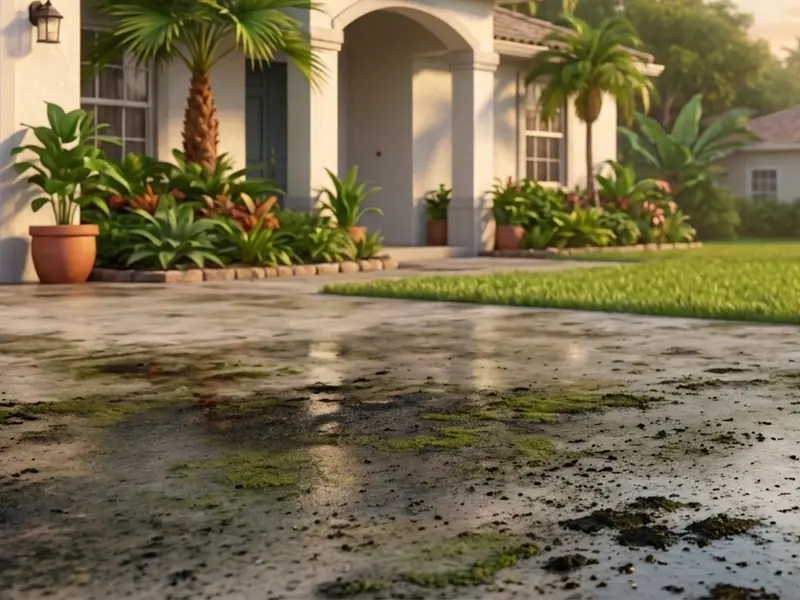
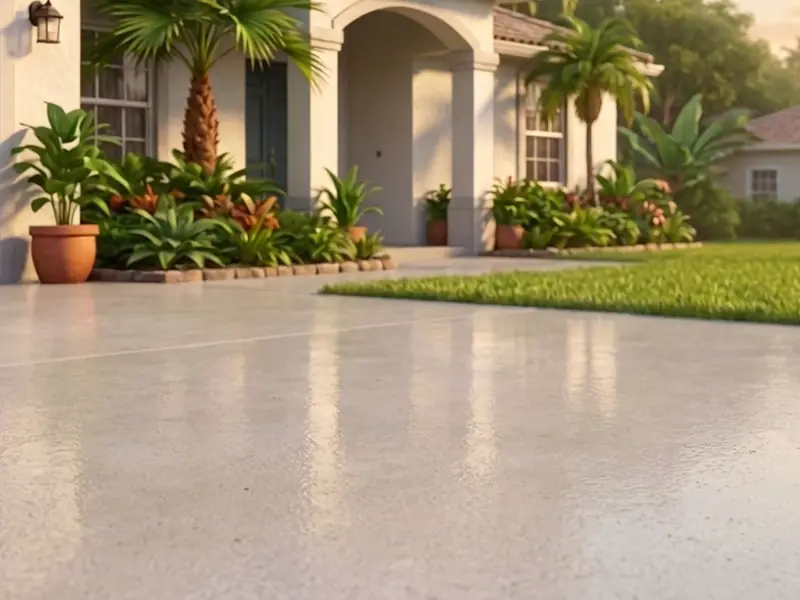 BeforeAfter
Drag to compare. Illustration; your crew sends real before-and-after photos of your own home.
See my price →